Cost to Hydroseed Commercial Sites: 2026 UK Prices
Last Updated: September 2026
Written by James Thomson, Director at CDTS North & West, UK hydroseeding contractors
How much does hydroseeding cost in the UK?
Commercial hydroseeding in the UK costs between £0.30 and £0.90 per m² in 2026. Amenity grass hydroseeding runs £0.30 to £0.85 per m². Wildflower and biodiversity net gain (BNG) mixes run £0.45 to £0.90 per m². Bonded Fibre Matrix (BFM) and Engineered Fibre Matrix (EFM) erosion control applications cost approximately 30 to 50% more than standard rates. For areas under 2,000 m², a day rate of £1,280 to £2,100 plus VAT typically applies instead of per-m² pricing.
Rates on this page are indicative and reflect typical UK site conditions in 2026. Your project quote will depend on the specification, site access, slope, total area and travel distance. Every figure on this page comes from live CDTS North & West pricing, not industry averages.
Need a contractor rather than price guidance? See our
commercial hydroseeding services.
Hydroseeding Cost at a Glance
This summary covers the main types of commercial hydroseeding work carried out on UK construction and land restoration sites. All prices are indicative and based on typical site conditions. Your quote will reflect the specific requirements of your project.
Not familiar with the hydroseeding process? Our guide to how hydroseeding works covers the method, equipment, and specifications used on UK construction sites.
| Application type | Typical cost per m² | Best for |
|---|---|---|
| Amenity grass hydroseeding | £0.30 – £0.85 | Housing public open space, SUDS features, level embankments, general revegetation. |
| Wildflower and BNG specification mixes | £0.45 – £0.90 | Biodiversity net gain compliance, species-rich grassland, ecological restoration. |
| BFM / EFM erosion control | £0.50 – £1.30 Approx. 30 to 50% above standard rates | Steep slopes (2:1 and steeper), dam faces, quarry benches, highway and rail embankments. |
| Day rate (sites under 2,000 m²) | £1,280 – £2,100 + VAT Per day, not per m² | Single features, patch repairs, sites where a day rate is more practical than per-m² pricing. |
Pricing by Specification
The rates below break down hydroseeding costs by specification type. Each range assumes a prepared site with reasonable vehicle access. Your quote will reflect the specific seed mix, mulch type, slope conditions and total area for your project.
Amenity grass hydroseeding: £0.30 to £0.85 per m²
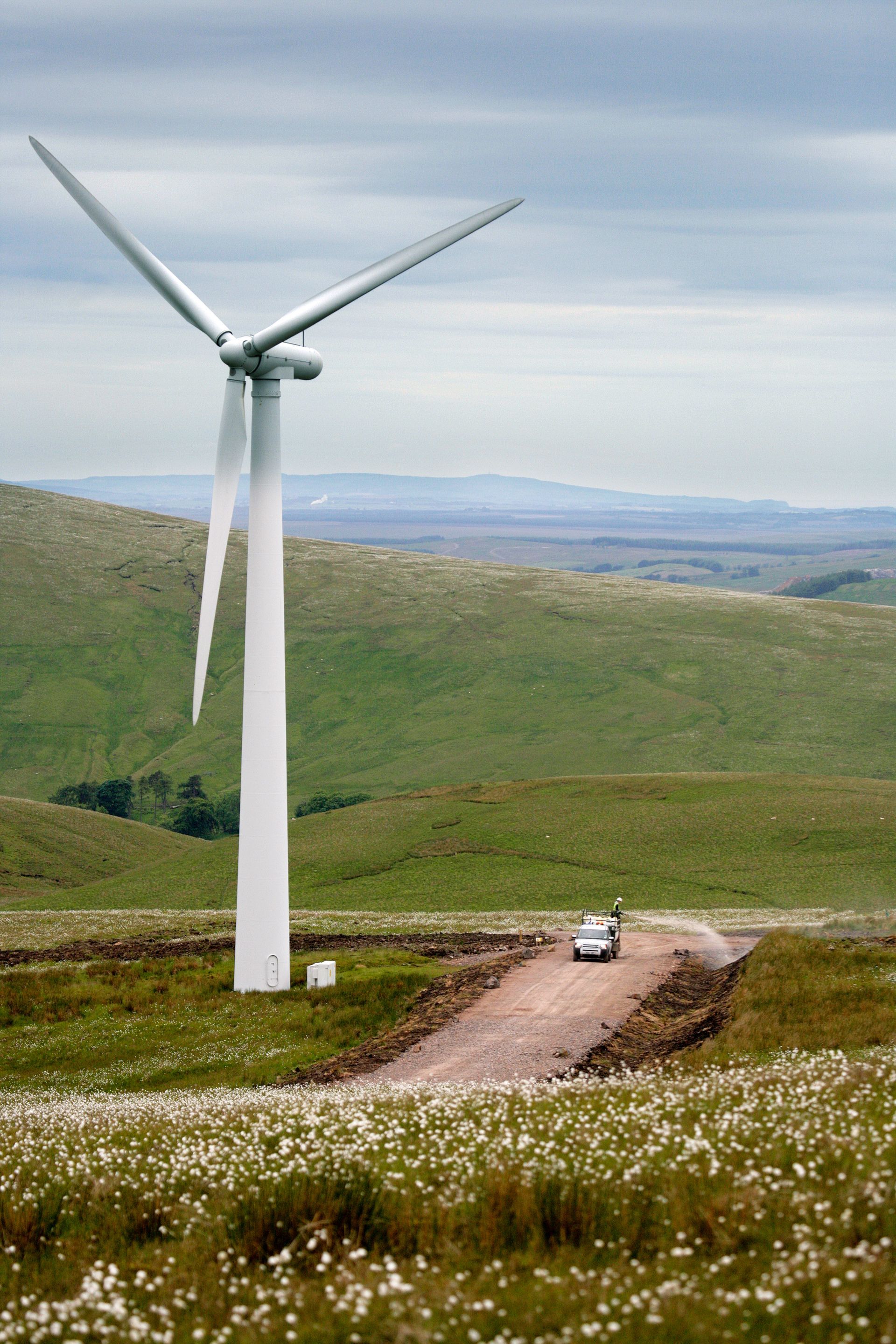
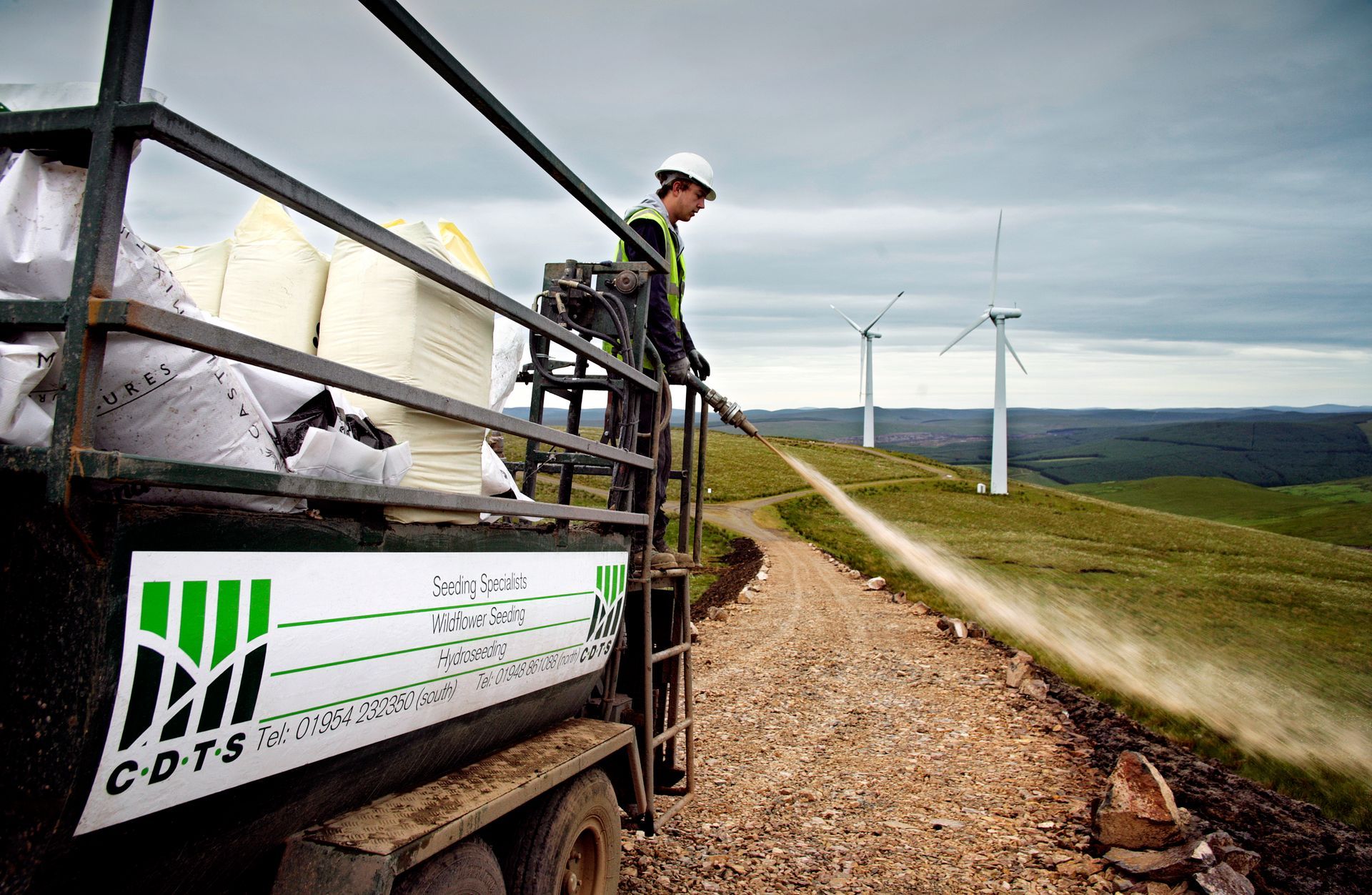
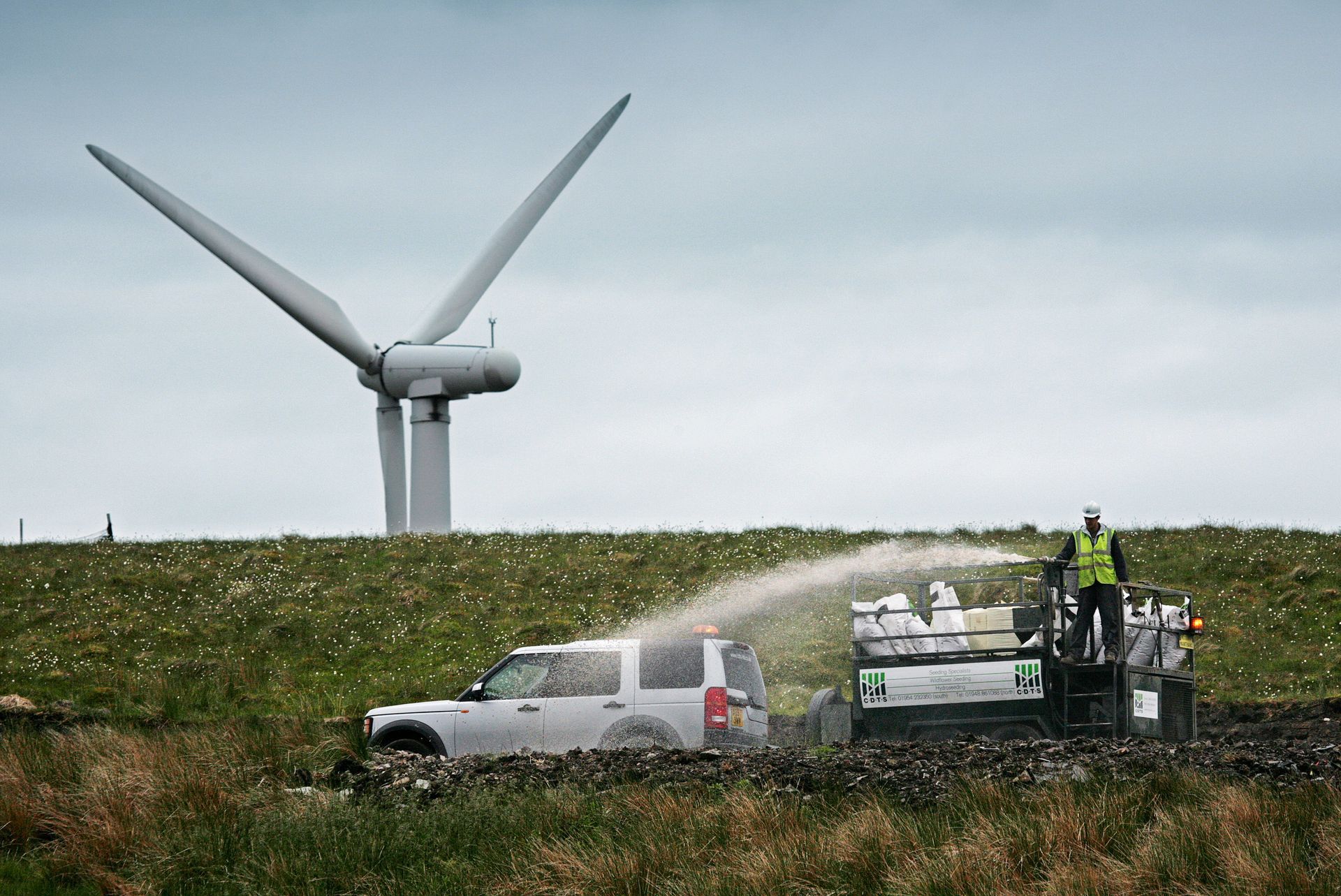
Standard amenity grass hydroseeding on a prepared site typically costs £0.30 to £0.85 per m². The rate is driven primarily by total area and site access. Larger contiguous areas with good vehicle access for the 6,000L lorry-mounted hydroseeder sit at the lower end of this range. Smaller or access-restricted sites sit at the higher end.
Wildflower and BNG hydroseeding: £0.45 to £0.90 per m²
Wildflower seeding and species-rich grassland mixes for biodiversity net gain (BNG) compliance typically cost £0.45 to £0.90 per m². The uplift over amenity grass reflects seed cost: UK native wildflower and species-rich mixes are several times more expensive per kilogram than standard amenity grass seed. Hydroseeding remains significantly cheaper than wildflower turf (£15 to £25 per m²) or plug planting for establishing target BNG habitats.
BFM and EFM erosion control: £0.50 to £1.30 per m²
Bonded Fibre Matrix (BFM) and Engineered Fibre Matrix (EFM) applications for erosion control on steep slopes cost approximately 30 to 50% more than standard hydroseeding, typically £0.50 to £1.30 per m². The increase reflects the specialist mulch materials required to form a continuous erosion-resistant matrix on slopes of 2:1 (27°) and steeper, with BFM delivering up to 99% C-factor erosion reduction on gradients to 1:1.
Day rates for smaller sites: £1,280 to £2,100 plus VAT
For areas under 2,000 m², CDTS North & West typically quotes a day rate rather than per-m². Day rates range from £1,280 to £2,100 plus VAT and depend on travel distance and site requirements. The day rate covers mobilisation, materials and application. For very small or tightly enclosed areas, conventional seeding may be more cost-effective and we will say so.
SEEDING SPECIALISTS
The table below converts per-m² rates into realistic total cost ranges for typical UK project sizes. Assumes standard specification and reasonable site access.
Hydroseeding Cost by Project Size
| Project type | Typical area | Indicative cost range |
|---|---|---|
| SUDS pond embankment (housing) | 2,000 m² | £600 to £1,700 |
| Housing development public open space and embankments | 5,000 m² | £1,500 to £4,250 |
| Highway embankment scheme | 10,000 m² | £3,000 to £8,500 |
| Landfill cap or quarry restoration | 25,000 m² | £7,500 to £21,250 |
| Major infrastructure or land reclamation | 50,000 m² and above | £15,000 to £42,500 and above |
What Drives Hydroseeding Cost Up or Down
Every quote is site-specific. These are the factors that move the per-m² rate.
What increases cost
- Small or scattered areas. Multiple small plots need repeated mobilisation and setup, pushing the per-m² rate higher.
- Travel distance. Sites far from the CDTS North & West base in Cheshire increase mobilisation costs. National coverage remains economic above a certain project size.
- Difficult ground conditions. Poor soils, steep slopes, contaminated substrates or restoration sites may require higher material application rates, soil amendments, or a BFM or EFM product.
- Specialist seed mixes. UK native wildflower, species-rich grassland and BNG-specification mixes cost significantly more per kilogram than standard amenity grass seed.
What reduces cost
- Large contiguous areas. The bigger the site, the better the value per m². On areas over 100,000 m² the 6,000L lorry-mounted hydroseeder delivers peak throughput.
- Good vehicle access. Sites that accept a lorry-mounted unit without restrictions allow faster application and lower rates than sites where smaller towed units are required.
- Standard amenity grass mixes. Straightforward grass seed specifications keep material costs down.
- Flat or gentle slopes. Standard hydroseeding (without BFM or EFM) is viable to 3:1 (18°). Anything steeper moves the project into erosion control territory.
Hydroseeding vs the Alternatives
Hydroseeding is significantly cheaper than turfing and than installed erosion control blankets. On larger sites it can also be cost-competitive with conventional drill seeding, while offering faster coverage, better erosion protection and access to terrain drill seeders cannot reach.
| Hydroseeding Amenity grass | Hydroseeding BFM or EFM erosion control | Conventional Drill seeding | Erosion Blankets Installed RECPs | Turfing Laid turf | |
|---|---|---|---|---|---|
| Cost / m² | £0.30–£0.85 | £0.50–£1.30 | £0.20–£2.00 | £8–£12 | £15–£25 |
| Daily coverage | 2–3 hectares | 2–3 hectares | 1–2 hectares | 0.5–1 hectare | 0.2–0.5 hectares |
| Max slope | 3:1 (18°) | 1:1 (45°) | 4:1 (14°) | 2:1 (27°) | 4:1 (14°) |
| Erosion protection | Good (70–75%) | Excellent (up to 99% with BFM) | Limited until established | Good (85–90%) | Immediate |
Worked example: a 2,000 m² development embankment
On a 2,000 m² SUDS or housing embankment originally specified for turf, the cost comparison is substantial:
- Turfing at £15 to £25 per m² = £30,000 to £50,000
- Hydroseeding at £0.30 to £0.85 per m² = £600 to £1,700
The saving is roughly 95%. On developments with multiple embankments, verges or open-space slopes, the cumulative saving across a scheme can be significant. Establishment outcomes still depend on specification, seedbed preparation, seasonal timing, weather and aftercare. Hydroseeding does not deliver instant cover in the way turf does, so the two methods fit different programme needs.
What a CDTS Hydroseeding Quote Includes
A CDTS North & West quote covers the full application from initial advice through establishment monitoring. You do not pay for ground preparation works or ongoing maintenance as part of the hydroseeding quote.
How we quote
For areas above 2,000 m² we quote per m² against your drawings and specification. For smaller sites we quote a day rate. Lump-sum pricing is available on request for rolling programmes of work across multiple sites.
What's not typically included
Cultivation, topsoil placement and ongoing landscape maintenance after establishment are not included in a standard hydroseeding quote. If your project needs these, we will scope them separately or coordinate with your groundworks contractor.
1
Site survey and specification review
We assess site conditions, access, slopes and specification requirements against your drawings.
2
Seed mix design
We specify the right mix for your soil, aspect and project objectives, whether that is rapid amenity cover, BNG-compliant wildflower meadow, or BFM erosion control.
3
Pre-application advice
We advise on seedbed preparation, timing and any site prep your groundworks contractor should complete.
4
Full application
Mobilisation, materials, trained operatives and a hydroseeder sized to your site. Works are delivered under full RAMS with environmental controls in place.
Frequently Asked Questions
How much does hydroseeding cost per m²?
Commercial hydroseeding in the UK costs £0.30 to £0.90 per m² in 2026. Amenity grass is £0.30 to £0.85 per m². Wildflower and BNG mixes are £0.45 to £0.90 per m². BFM and EFM erosion control applications add roughly 30 to 50% to standard rates. Site size, access and seed specification are the main variables.
How much does it cost to hydroseed a typical site?
A 2,000 m² SUDS embankment costs roughly £600 to £1,700. A 10,000 m² highway embankment scheme costs roughly £3,000 to £8,500. A 25,000 m² landfill cap or quarry restoration costs roughly £7,500 to £21,250. For a full breakdown by project size, see the cost by project size table above.
Is hydroseeding expensive?
No. Hydroseeding is one of the most cost-effective commercial seeding methods available in the UK. It is roughly 95% cheaper than turfing on a per-m² basis, significantly cheaper than installed erosion control blankets, and competitive with conventional drill seeding on larger sites while offering faster coverage and better erosion protection.
Is there a minimum area for hydroseeding?
There is no strict minimum, but for areas under 2,000 m² a day rate of £1,280 to £2,100 plus VAT is usually more practical than per-m² pricing. For very small areas, conventional seeding may be more cost-effective. We will say so if that is the case for your site.
Can hydroseeding reduce the cost of BNG compliance?
Yes. Hydroseeding allows precise application of wildflower and species-rich mixes across large or difficult areas at a fraction of the cost of plug planting or wildflower turf. It is particularly effective for establishing target habitats on SUDS features, slopes and restricted-access areas where manual planting would be slow and costly. See our BNG hydroseeding page for detail.
How much does hydromulching cost compared to hydroseeding?
Hydromulching and hydroseeding refer to the same hydraulic application process. In practice, "hydromulching" is often used when the emphasis is on the mulch or fibre component for erosion control. Standard hydromulching sits within the £0.30 to £0.85 per m² range. Bonded Fibre Matrix (BFM) and Engineered Fibre Matrix (EFM) high-specification applications sit at £0.50 to £1.30 per m².
How much cheaper is hydroseeding than turfing?
Roughly 95% cheaper per m². A 2,000 m² embankment costs £30,000 to £50,000 as turf, but £600 to £1,700 as hydroseeding. Turf gives immediate cover, which matters for high-profile frontages. For SUDS slopes, embankments, open-space grassland and BNG areas, hydroseeding delivers the required outcome at a fraction of the cost.
Is hydroseeding cheaper than erosion control blankets?
Significantly. Installed erosion control blankets cost £8 to £12 per m², versus £0.50 to £1.30 per m² for BFM hydroseeding. BFM also delivers equivalent or better erosion protection (up to 99% C-factor reduction) and reduces installation time by 60 to 70% compared with manually pegged blankets. See our BFM vs erosion control blankets comparison for detail.
How quickly can CDTS North & West start?
Lead times depend on current workload and season, but CDTS operates a fleet of six hydroseeders nationally, so we can typically mobilise within a few days. A 6,000L lorry-mounted hydroseeder treats 2 to 3 hectares per day. Most sites are completed within one to three days of on-site work.
Do you sell hydroseeders or provide startup pricing for hydroseeding businesses?
No. CDTS North & West is a commercial hydroseeding contractor, not an equipment supplier. For machine pricing or hydroseeder startup costs, contact a manufacturer or dealer such as Finn, TurfMaker or a UK importer.
Get a site-specific hydroseeding quote
Every project is different. Send your site drawings, specification and programme requirements and we will return a detailed quote, typically within one to two working days.