

Specialist Seeding Services for UK Construction and Restoration
CDTS North & West delivers five specialist seeding methods from a single contractor appointment: hydroseeding, conventional seeding, wildflower and BNG seeding, direct tree seeding, and brush seed harvesting.
Most construction sites need more than one method. A housing development might require BFM hydroseeding on steep SUDS embankments, conventional drill seeding on level public open space, wildflower mixes in BNG habitat zones, and direct tree seeding on a reclamation area. Appointing a single contractor across all five methods removes coordination between trades, reduces mobilisation costs, and gives you one point of accountability for the entire vegetation scope.
This page compares each method so you can identify which combination suits your site conditions, specification requirements and programme. If you already know the problem you need solved rather than the method, our Solutions pages route by project type instead.
How to Choose the Right Seeding Method
The right method depends on five site variables. No single technique suits every zone of every project, and selecting the wrong one wastes time and budget.
Slope gradient
This is the single most important variable. Conventional seeding requires tractor access, which limits it to gradients of roughly 4:1 (14 degrees) or gentler. Standard hydroseeding extends this to approximately 3:1 (18 degrees). For anything steeper, Bonded Fibre Matrix (BFM) hydroseeding holds seed and provides erosion protection on slopes as steep as 1:1 (45 degrees). If your site has embankments, cuttings or bunds steeper than 3:1, you need hydraulic application.
Access and ground conditions
Lorry-mounted hydroseeders need vehicle access within hose reach of the target area. Where access is restricted, such as railway corridors, narrow service strips or soft ground, CDTS North & West deploys towed units from 2,000L to 4,000L behind tractors, Land Rovers or quad bikes. On sites where no machinery can reach the slope face at all, hydroseeding can apply seed from a distance via the spray nozzle. Conventional seeding requires the equipment to physically traverse the ground being seeded.
Area and programme
Hydroseeding covers 2 to 3 hectares per day from a lorry-mounted unit. Conventional drill seeding covers 1 to 2 hectares per day. On large-area schemes where programme is tight, hydroseeding delivers faster site coverage. On smaller, accessible sites where cultivation quality matters most, conventional seeding may be more appropriate and more cost-effective.
Ecological and specification requirements
BNG planning conditions, habitat creation targets and ecological mitigation schemes require specific seed mixes, often with local-provenance species. The application method must be matched to the specification. Wildflower mixes can be hydroseeded or conventionally drilled depending on slope and access. Brush seed harvesting collects local-provenance seed from donor sites for the most ecologically sensitive applications. Direct tree seeding establishes native woodland on hostile substrates where cell-grown planting is impractical or uneconomic.
Budget
Conventional seeding is the lowest-cost method for accessible, level ground (from approximately £0.20/m²). Hydroseeding costs more per square metre (from approximately £0.30/m² for amenity grass) but covers ground faster and provides erosion protection that conventional methods do not. Both are dramatically cheaper than alternatives: turfing costs £15 to £25/m² and erosion control blankets cost £8 to £12/m² installed. The comparison table below sets out the full cost and performance data for each method.
Method Comparison
This table compares all five CDTS North & West seeding methods across the variables that matter at tender stage: cost per square metre, daily coverage rates, maximum workable slope, erosion protection capability, and typical labour requirements. All figures are based on standard site conditions and typical UK projects.
For detailed pricing including worked examples by project size, see the full hydroseeding cost guide.
| Hydroseeding Amenity grass | Hydroseeding BFM / EFM erosion control | Conventional Seeding Drill & broadcast | Direct Tree Seeding Native woodland | Brush Seed Harvesting Local-provenance collection | |
|---|---|---|---|---|---|
| Cost / m² | £0.30–£0.85 | £0.50–£1.30 | £0.20–£2.00 | Project-specific | Project-specific |
| Daily coverage | 2–3 hectares | 2–3 hectares | 1–2 hectares | Variable by site | ~1 hectare donor site |
| Max slope | 3:1 (18°) | 1:1 (45°) | 4:1 (14°) | Moderate slopes | Gentle to moderate |
| Erosion protection | Good (70–75%) | Excellent (99%) | Limited | Limited | N/A |
| Typical labour | 2–3 operatives | 2–3 operatives | 4–6 operatives | 2–3 operatives | 2 operatives |
| Key advantage | Coverage speed on large areas and slopes | Immediate erosion control on steep ground | Lowest material cost on accessible sites | Woodland on hostile substrates | Local-provenance seed collection |
| Best for | Embankments, large areas, programme-critical schemes | Highway/rail cuttings, SUDS ponds, 1:1 to 3:1 slopes | Flat POS, amenity grass, playing fields, level earthworks | Quarry/landfill restoration, reclamation, BNG woodland | Ecological mitigation, donor-to-receptor habitat transfer |
Our Five Services

Hydroseeding
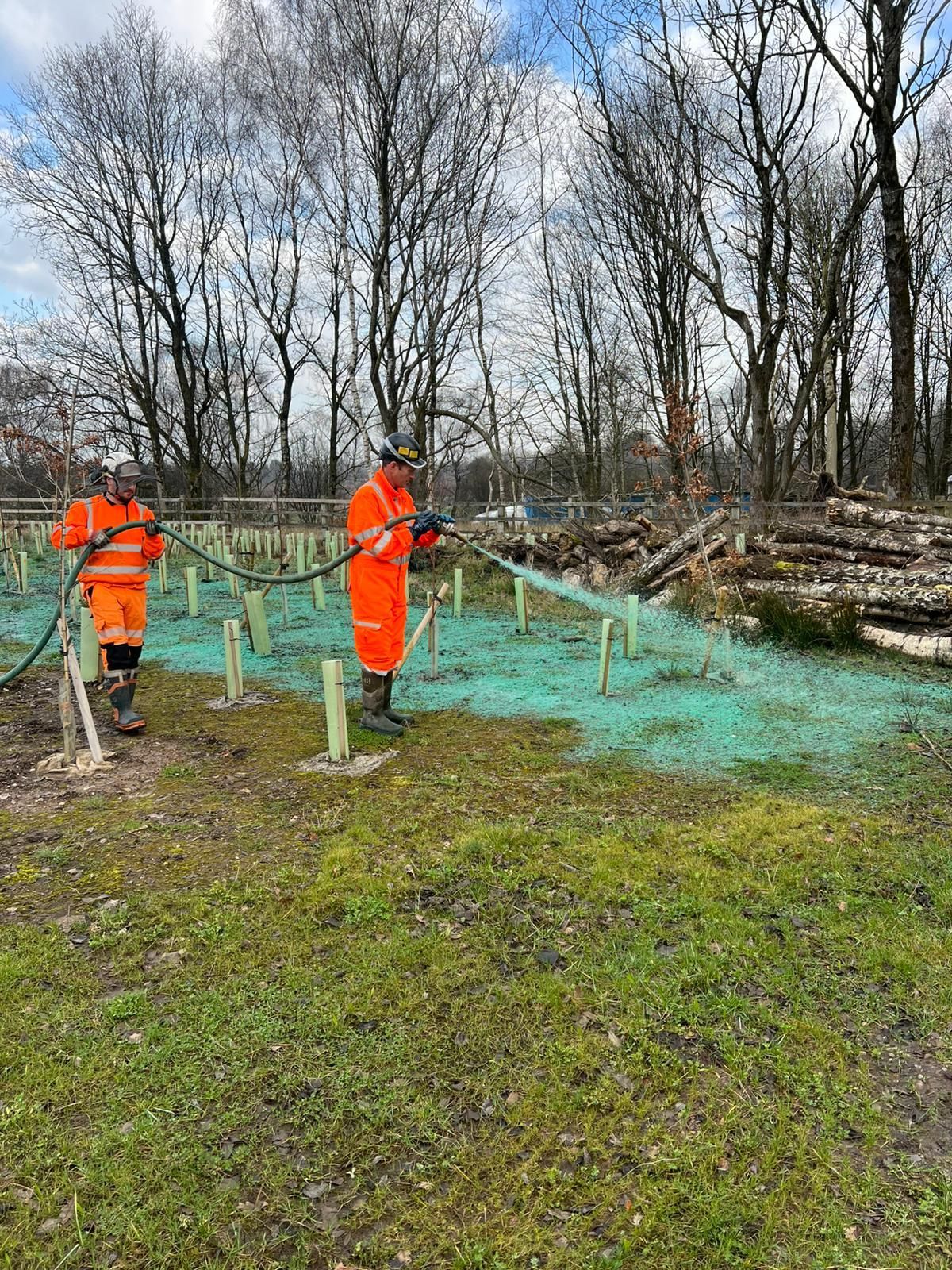
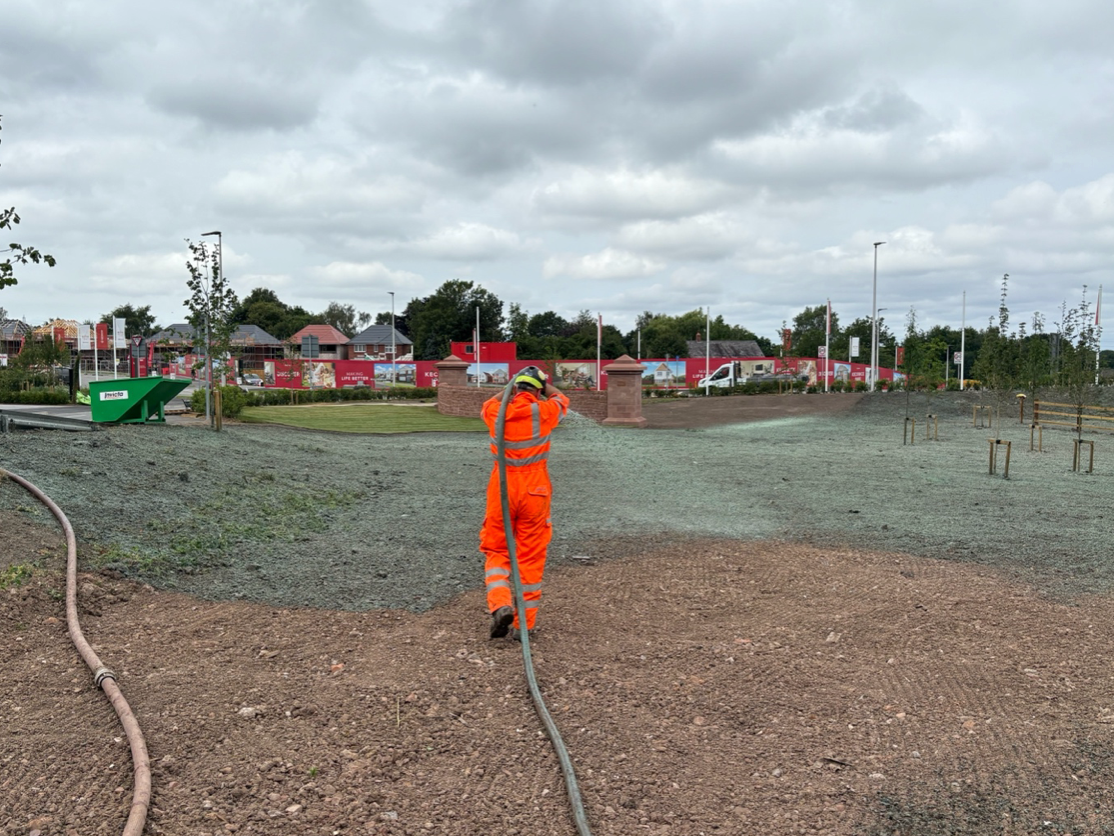
Hydraulic application of seed, water, mulch, fertiliser and tackifier onto prepared ground. The mulch matrix holds seed in place, retains moisture, and provides erosion protection during the establishment period. CDTS North & West operates six hydroseeders ranging from a 6,000-litre lorry-mounted Finn unit for large-scale highway and infrastructure works down to 2,000-litre towed units for restricted-access sites. Visible germination typically occurs within 7 to 14 days under optimal seeding conditions.

Wildflower & BNG Seeding
Specialist establishment of species-rich wildflower meadows and grasslands to meet Biodiversity Net Gain requirements under the Environment Act 2021, ecological mitigation conditions and habitat creation targets. CDTS North & West works from ecologist specifications or agreed habitat plans, selecting the right seed mixes and application method for each site's soil conditions, aspect and target habitat type.
Conventional Seeding
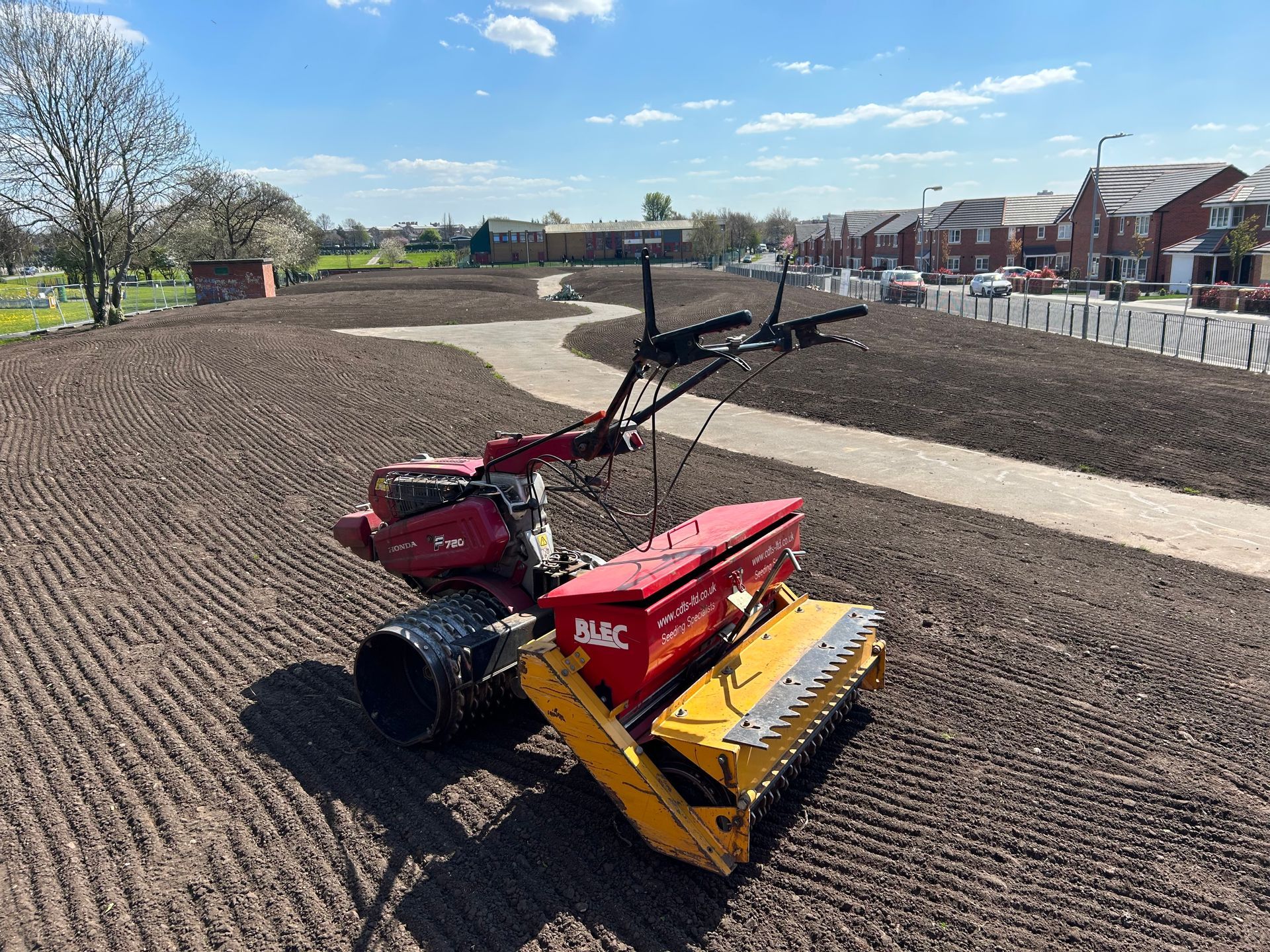
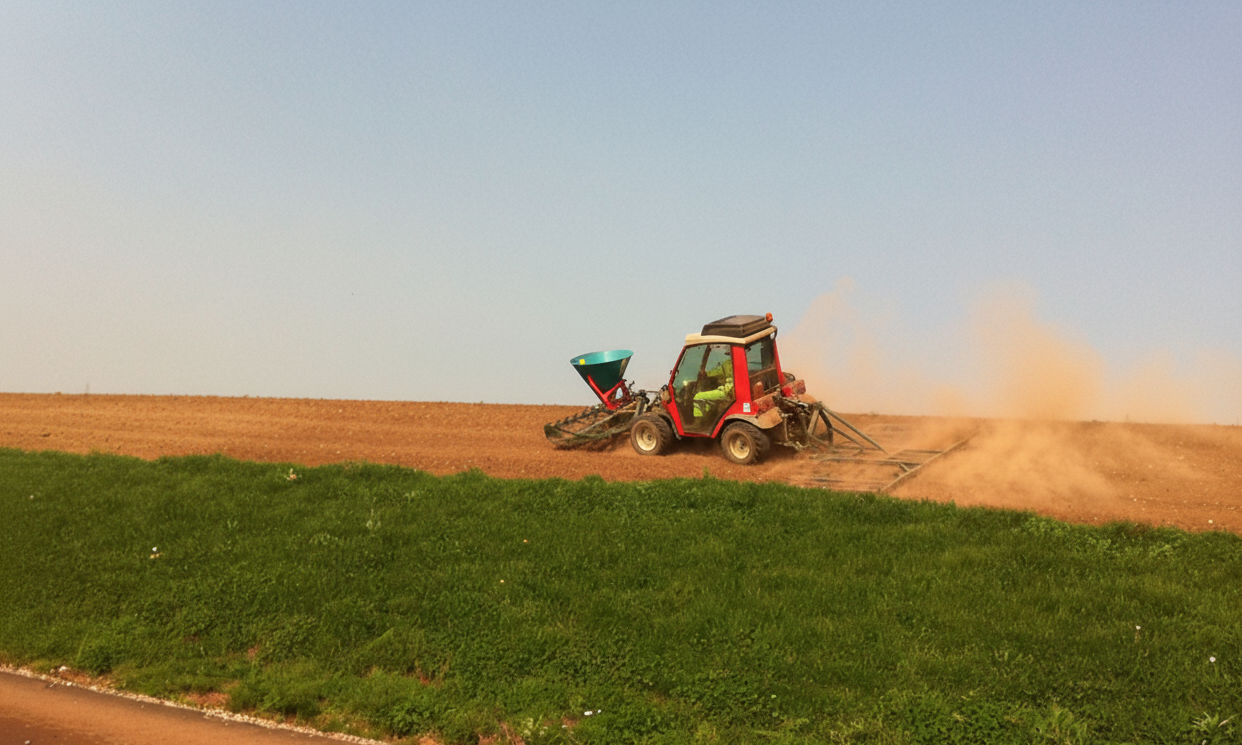
Mechanical seedbed preparation and precision seeding using power harrows, stone buriers, rotovators, Blec Turfmaker drills and seed spinners. This is the right method for level or gently sloping sites where full cultivation and drill seeding deliver the most uniform, cost-effective result. CDTS North & West's conventional seeding fleet includes pedestrian and tractor-mounted equipment suited to everything from multi-hectare highway verges to smaller landscape parcels on housing developments.

Direct Tree Seeding
Establishment of native woodland through direct sowing of treated tree seed, mimicking natural regeneration without the cost and maintenance requirements of cell-grown planting. CDTS North & West has pioneered direct tree seeding in the UK for over 30 years, with species-specific dormancy-breaking treatments and nurse crop mixes designed for each site. Particularly effective on hostile substrates such as quarry overburden, mineral waste and capped landfill where conventional tree planting has low survival rates.
Brush Seed Harvesting
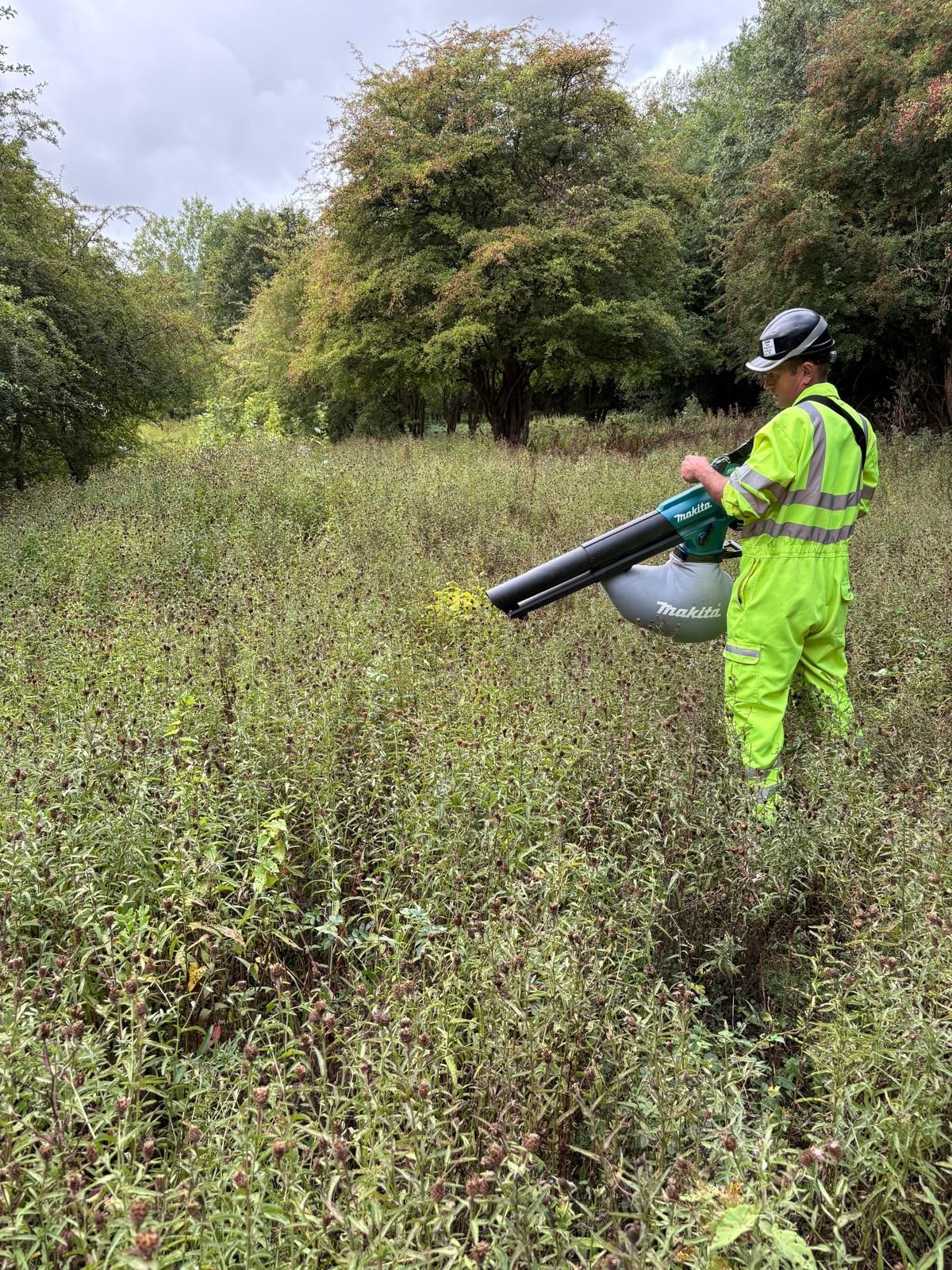
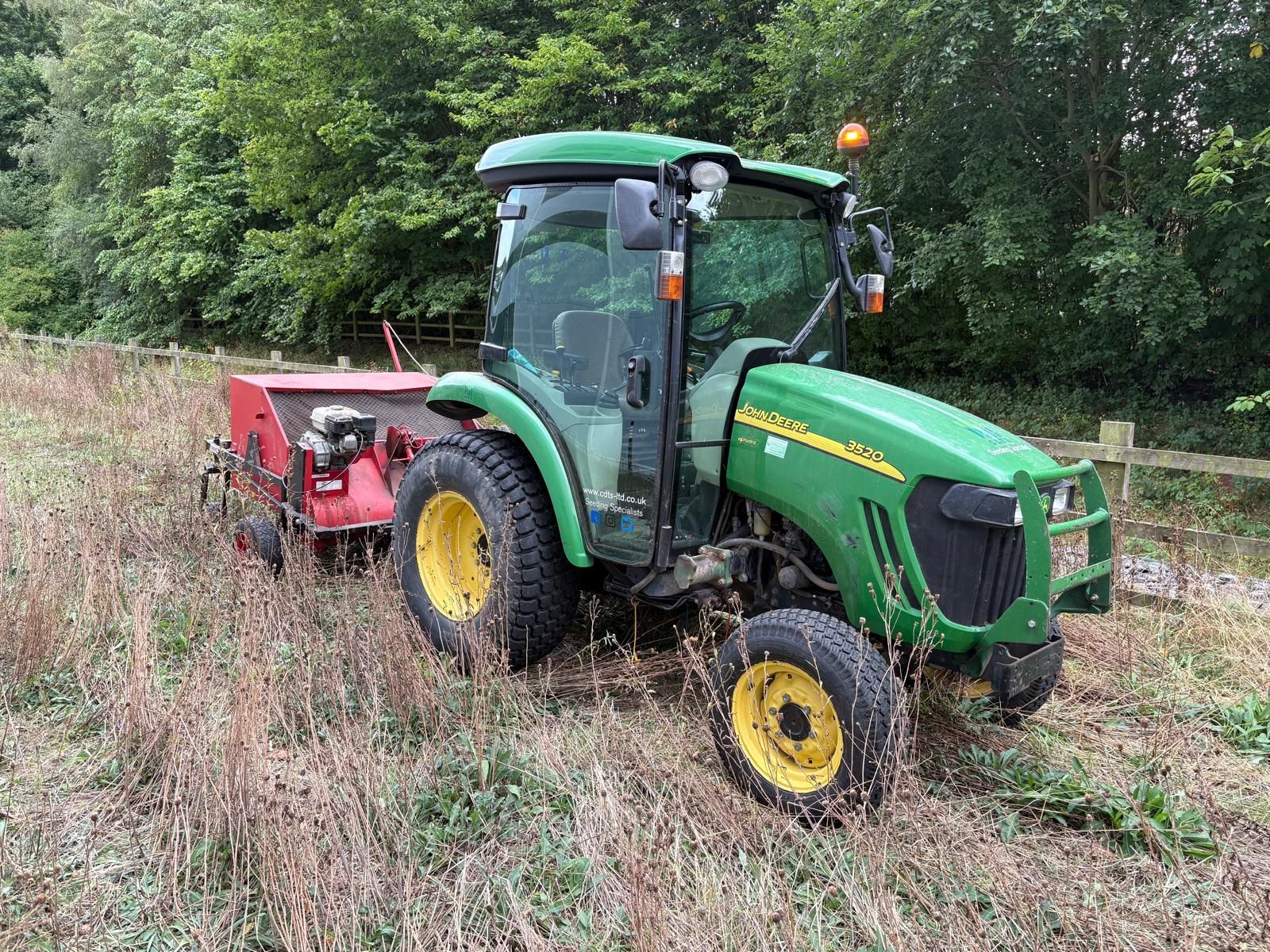
Collection of local-provenance wildflower and grass seed from donor sites using a purpose-built brush seed harvester, a low-ground-pressure unit towed behind a quad bike to minimise impact on sensitive habitats. One day's harvesting typically yields enough seed to sow approximately one hectare onto a prepared receptor site. Brush-harvested seed captures the genetic diversity and local adaptation of established plant communities, making it the preferred method for ecological restoration and habitat translocation.
How Methods Work Together on Multi-Zone Sites
Most construction sites are not a single uniform surface. They contain multiple zones with different gradients, soil types, access constraints and specification requirements. The advantage of appointing a contractor who delivers all five methods is that each zone gets the right technique, applied in the right sequence, without gaps between trades.
Typical housing development
Conventional drill seeding on level public open space and amenity areas. Hydroseeding with BFM on steep SUDS pond embankments. Wildflower hydroseeding in BNG habitat creation zones. Conventional or broadcast seeding on acoustic bunds and boundary areas.
Highway or rail scheme
BFM hydroseeding on steep cuttings and embankments (1:1 to 3:1). Standard hydroseeding on moderate slopes and verges. Conventional seeding on flat formation areas. Wildflower seeding in ecological mitigation zones specified in the environmental statement.
Quarry or landfill restoration
Hydroseeding on capped landfill and overburden slopes. Direct tree seeding for woodland establishment on hostile substrates. Brush seed harvesting from a nearby donor site to provide local-provenance grassland seed. Conventional seeding on level restored areas.
BNG and ecological scheme
Wildflower hydroseeding or conventional seeding depending on slope and access. Brush seed harvesting where local provenance is specified. Direct tree seeding for woodland habitat creation. Hydroseeding with nurse crop on exposed areas requiring rapid stabilisation before wildflower establishment.
SEEDINg SPECIALISTS
CDTS North & West delivers seeding to the relevant industry specifications for each sector. If you are preparing a tender or specification, these are the standards our methods align with:
- General landscape seeding: BS 4428:1989 (Code of practice for general landscape operations) sets out requirements for ground preparation, seeding rates, and establishment that apply across conventional and hydroseeded applications.
- Highway works: The Manual of Contract Documents for Highway Works (MCHW) Series 3000 specifies vegetation requirements for Highways England and trunk road schemes, including seeding rates, species mixes, and establishment periods for embankments, cuttings and verges.
- Erosion control: CIRIA publications C532 (Control of water pollution from construction sites), C753 (The SuDS Manual), C768 (Guidance on the construction of SuDS) and C811 (Environmental good practice on site) provide technical guidance on erosion and sediment control that underpins our BFM and hydroseeding specifications.
- BNG and ecological: The Statutory Biodiversity Metric (Defra) and associated Technical Supplement define habitat condition criteria and management requirements that our wildflower and BNG seeding specifications are designed to satisfy.
- Rail: Network Rail specifications for lineside vegetation management and slope stabilisation apply to our rail embankment work.
Specification and Standards Alignment
If your project references specific standards or specifications, we can review them and advise on the right seeding approach to achieve compliance.
Seasonal Considerations
Seeding success depends on timing. The optimal window for most grass and wildflower seeding in the UK is March to May and August to October, when soil temperatures support germination and there is typically enough rainfall for establishment. Outside these windows, the risk of poor germination or establishment failure increases.
Hydroseeding extends the viable season beyond what conventional methods can achieve, because the mulch matrix retains moisture and protects seed during drier or cooler conditions. BFM applications provide erosion protection immediately regardless of season, even if germination is delayed until conditions improve.
Some species and applications have specific timing requirements. Wildflower mixes often perform best with autumn sowing to allow natural stratification over winter. Direct tree seeding requires dormancy-breaking treatments timed to species-specific germination triggers.
Equipment and Fleet
CDTS North & West maintains a specialist fleet purpose-built for seeding and erosion control across the range of site conditions encountered on UK construction projects.
Hydroseeding fleet (6 units)
A 6,000-litre Finn lorry-mounted hydroseeder for large-scale highway, infrastructure and open-site work. A 4,000-litre Finn trailer-mounted hydroseeder. Towed units at 3,500L, 3,000L, 2,500L and 2,000L for restricted-access sites, railway corridors, and sensitive ground where low-impact access is required.
Seedbed preparation
Power harrows, stone buriers, rotovators (1.5m and 2m), Blec Turfmaker pedestrian drills, Harley Power Rake, BCS pedestrian harrows and rotovators, and fixed-tine harrows. This equipment handles everything from fine-grade amenity seedbed preparation to rough cultivation on reclamation substrates.
Specialist access
Aebi TT275 slope tractor for work on steep gradients where standard tractors cannot operate safely. Low-ground-pressure equipment for soft ground, wetland margins and capped landfill surfaces.
Brush seed harvester
A purpose-built unit towed behind a quad bike for collecting local-provenance seed from donor habitats with minimal ground disturbance.
FAQs
Can I appoint CDTS North & West for all seeding methods on my project?
Yes. CDTS North & West delivers hydroseeding, conventional seeding, wildflower and BNG seeding, direct tree seeding and brush seed harvesting from a single appointment. This means one set of RAMS, one mobilisation, one point of contact for the entire vegetation scope. On multi-zone projects, we sequence the methods across different areas to minimise programme disruption and avoid the coordination problems that arise when multiple seeding subcontractors are working on the same site.
How do you decide which method to use on each part of my site?
We base the recommendation on five variables: slope gradient, access and ground conditions, area size, ecological or specification requirements, and budget. On most projects, the method for each zone is straightforward once these are assessed. We review your drawings, specification or site photos, assess each zone, and provide a clear recommendation with reasoning. If you already have a specification from your ecologist or landscape architect, we review it for buildability and advise on any adjustments.
What is the difference between your Services and Solutions pages?
Our Services pages explain the five seeding methods CDTS North & West delivers, focusing on how each technique works, what equipment is used, and where each method fits. Our Solutions pages are organised by the problem you need solved, such as erosion control on steep slopes, BNG compliance, or land reclamation. If you know the method you need, start here. If you know the problem but not the method, start with Solutions.
Do you provide method statements and RAMS before starting work?
Yes. CDTS North & West provides project-specific RAMS and method statements for every project before mobilisation. We hold CHAS accreditation (membership CHAS-29009949, SSIP Approved Contractor) and carry £5M public liability, £10M employers liability and £350K contractors all risks insurance. All documentation is available for tender submissions. See our compliance and accreditation page for details.
How quickly can you mobilise, and what area of the UK do you cover?
CDTS North & West is based in Cheshire and operates across the UK. We can typically mobilise within a few days depending on current workload and season. Our core service area covers the North West, North Wales, the Midlands and into Scotland, but we regularly travel further for larger infrastructure, reclamation and ecological schemes. See our service area page or regional pages for North West, North Wales, Midlands and Scotland.
Can you work from our ecologist's specification or do you provide your own?
Both. We routinely work from ecologist-prepared specifications, habitat management plans and landscape architect drawings. If you do not yet have a specification, we can advise on appropriate seed mixes, application rates and methods based on site conditions and target habitat type. For BNG schemes, we align with Statutory Biodiversity Metric condition requirements to ensure the seeding specification supports your target habitat scores.
How does hydroseeding compare to turfing and erosion control blankets on cost?
On a 2,000 m² SUDS pond, amenity hydroseeding (£0.30–£0.85/m²) saves over £14,000 compared to turfing (£15–£25/m²). On a 5,000 m² embankment, BFM hydroseeding can save £35,000 to £55,000 compared to erosion control blankets (£8–£12/m² installed). See our hydroseeding cost guide for current per-m² rates and worked examples by project size.
Discuss Your Project
Share your drawings, specification or project brief and we will recommend the right seeding method, or combination of methods, for each zone of your site. We review plans at any stage, from early design through to tender.


