
Seeding for Residential and Commercial Development Sites
Meet Adoption Deadlines, BNG Conditions and Erosion Requirements Across Every Zone of Your Site
Every housing or commercial development reaches a point where exposed ground needs to become established vegetation, and the programme will not wait. Adoption timelines, BNG planning conditions and erosion risk during construction all converge on the same question: how do you get reliable vegetation cover across amenity areas, SUDS features, embankments and habitat zones without delaying handover?
This page explains where vegetation problems typically arise on development sites, the methods CDTS North & West uses to solve them, and what to include in your tender pack so we can price accurately.
SEEDING SOLUTIONS
Development sites face vegetation challenges that directly affect programme, adoption and planning compliance. Leaving any of these unresolved creates cost that compounds over time.
Adoption delays on SUDS and public open space
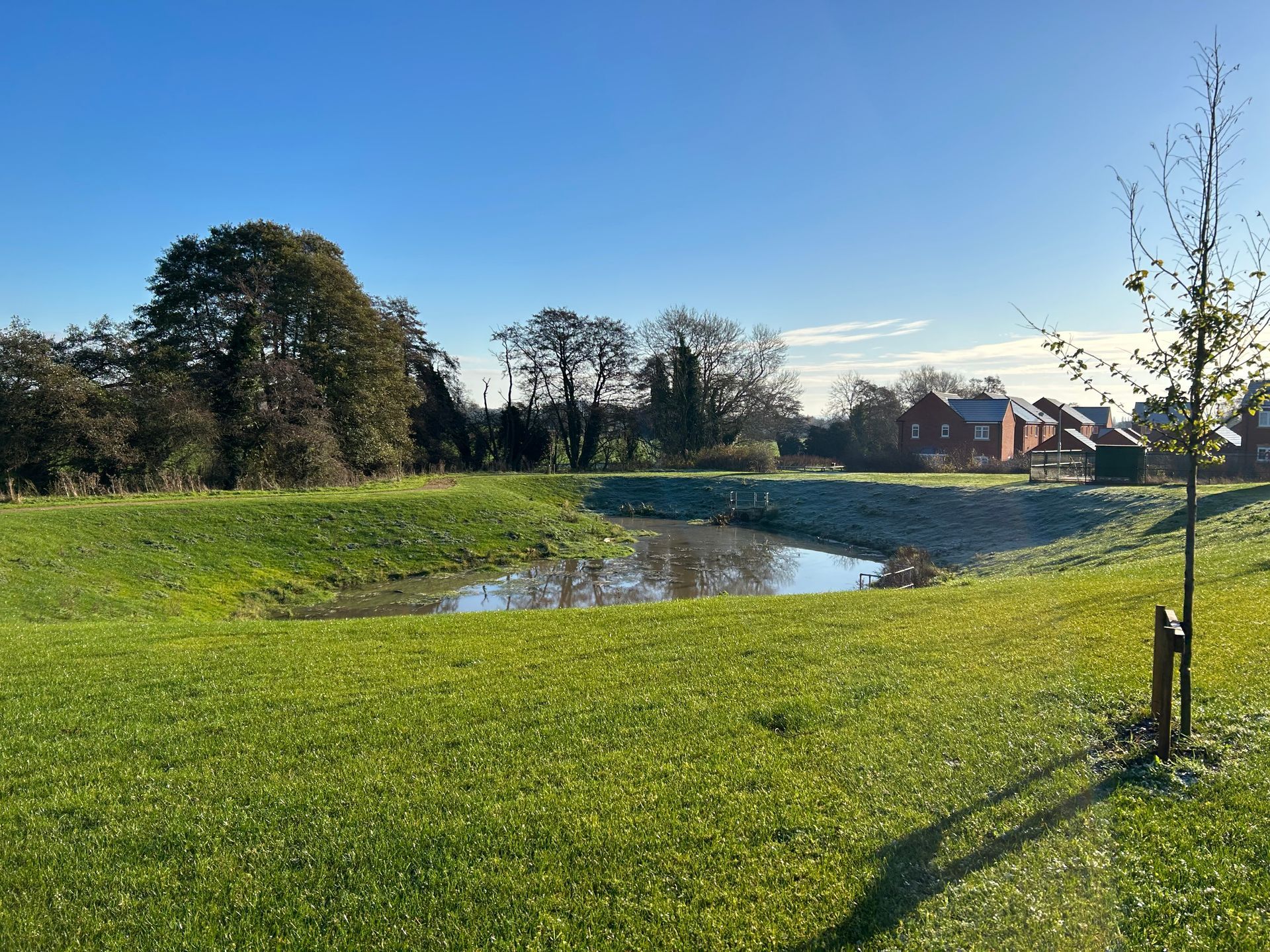
Local authorities will not adopt attenuation ponds, swales, highway verges or public open space until vegetation is established and stable. Every month of delayed adoption extends the developer's maintenance liability and ties up resources that should be on the next phase.
Where Vegetation Delays Cost Developers Money
BNG planning conditions blocking completion
Since February 2024, most developments in England require 10% Biodiversity Net Gain measured against the statutory Defra Metric. LPAs are now checking BNG delivery before issuing completion certificates. Habitats that do not establish to target condition force the shortfall into off-site units or statutory credits, both of which cost significantly more than getting on-site delivery right first time.
Erosion during construction
SUDS pond slopes, temporary stockpiles and development margins left bare erode quickly, creating sediment control issues, environmental permit breaches and costly remediation that delays practical completion. On gradients steeper than 3:1, standard seeding methods struggle to hold seed in place without additional protection.
Multi-zone complexity
A typical housing development needs different vegetation treatments across different areas: erosion control on SUDS embankments, amenity grass on public open space, wildflower meadows in BNG habitat parcels, and possibly direct tree seeding on woodland creation zones. Coordinating multiple specialist contractors across these zones adds programme risk and procurement overhead.
How CDTS North & West Delivers Development Vegetation
We combine hydroseeding, conventional seeding, wildflower and BNG seeding, and erosion control into a single appointment, matching the right method to each zone of your site. This gives you one point of contact for the entire vegetation scope, reducing coordination between trades and simplifying your supply chain.
BNG-Compliant Habitat Creation
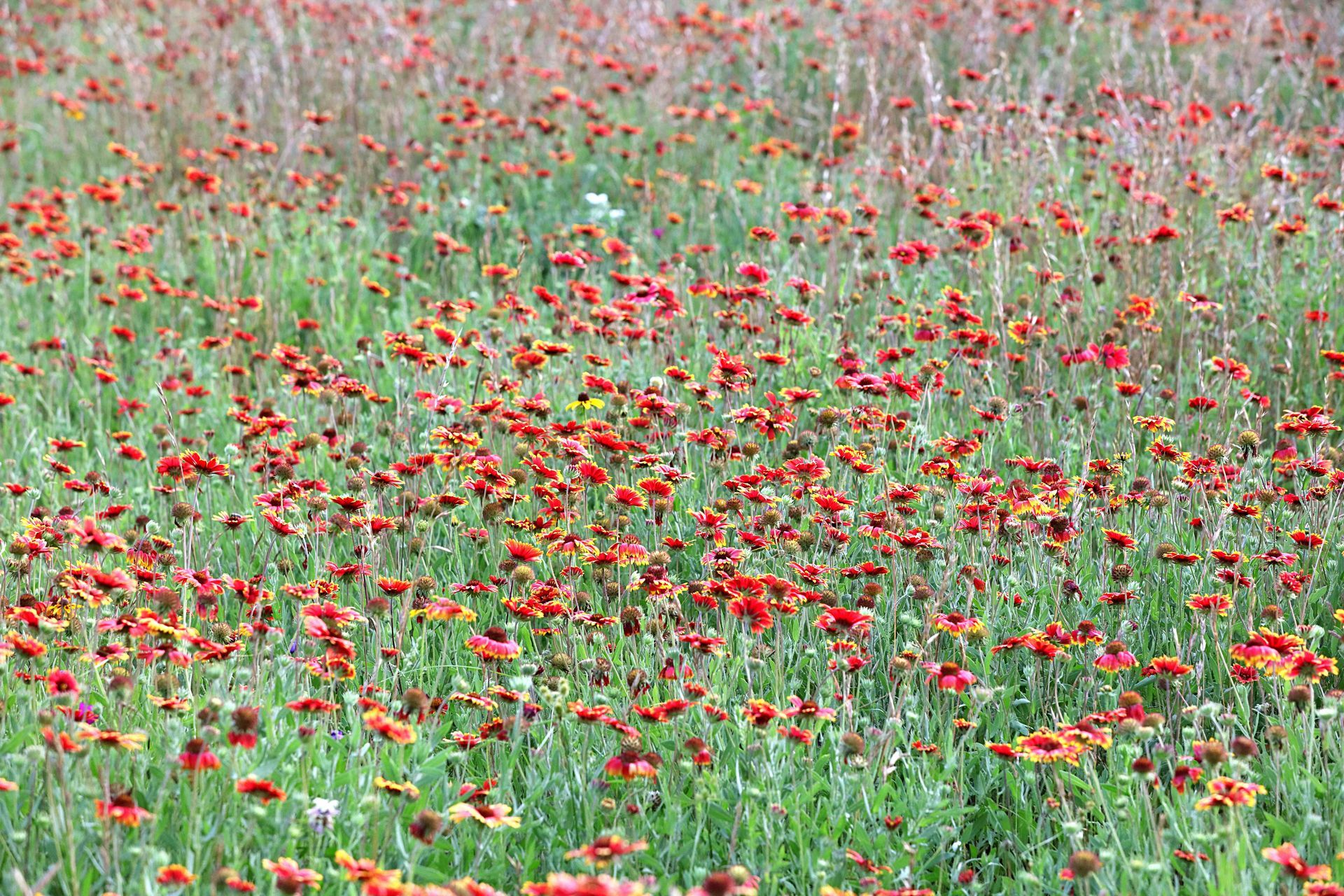
We deliver wildflower meadows, species-rich grassland and hedgerow establishment that contribute measurable biodiversity units under the statutory Defra Metric. We work with your project ecologist to specify appropriate seed mixes, source local-provenance seed where required, and provide post-implementation documentation including species sown, provenance certificates, application rates and photographic records for condition monitoring.
The seeding window is the constraint that catches most schemes. Wildflower and BNG mixes typically need either an autumn sowing (mid-August to early October) or spring sowing (late March to early May). Missing the window pushes establishment back by up to 12 months, which can delay BNG sign-off and plot releases. Early engagement with the seeding contractor, ideally at reserved matters stage, avoids this.
View our BNG & Wildflower Seeding page.
SUDS Pond and Embankment Stabilisation
Attenuation pond slopes on housing developments are often graded at 2:1 or 3:1 and face immediate rainfall exposure. We stabilise these using hydroseeding with tackifiers on moderate gradients, or Bonded Fibre Matrix (BFM) on steeper faces where standard methods will not hold. BFM bonds to the soil surface on contact, providing up to 99% erosion reduction from the point of application while vegetation establishes beneath. This protects against sediment discharge into drainage infrastructure and satisfies the erosion-resistant cover required for Section 104 adoption.
View our Steep Slopes & Erosion Control page.
Amenity Grassland and Public Open Space
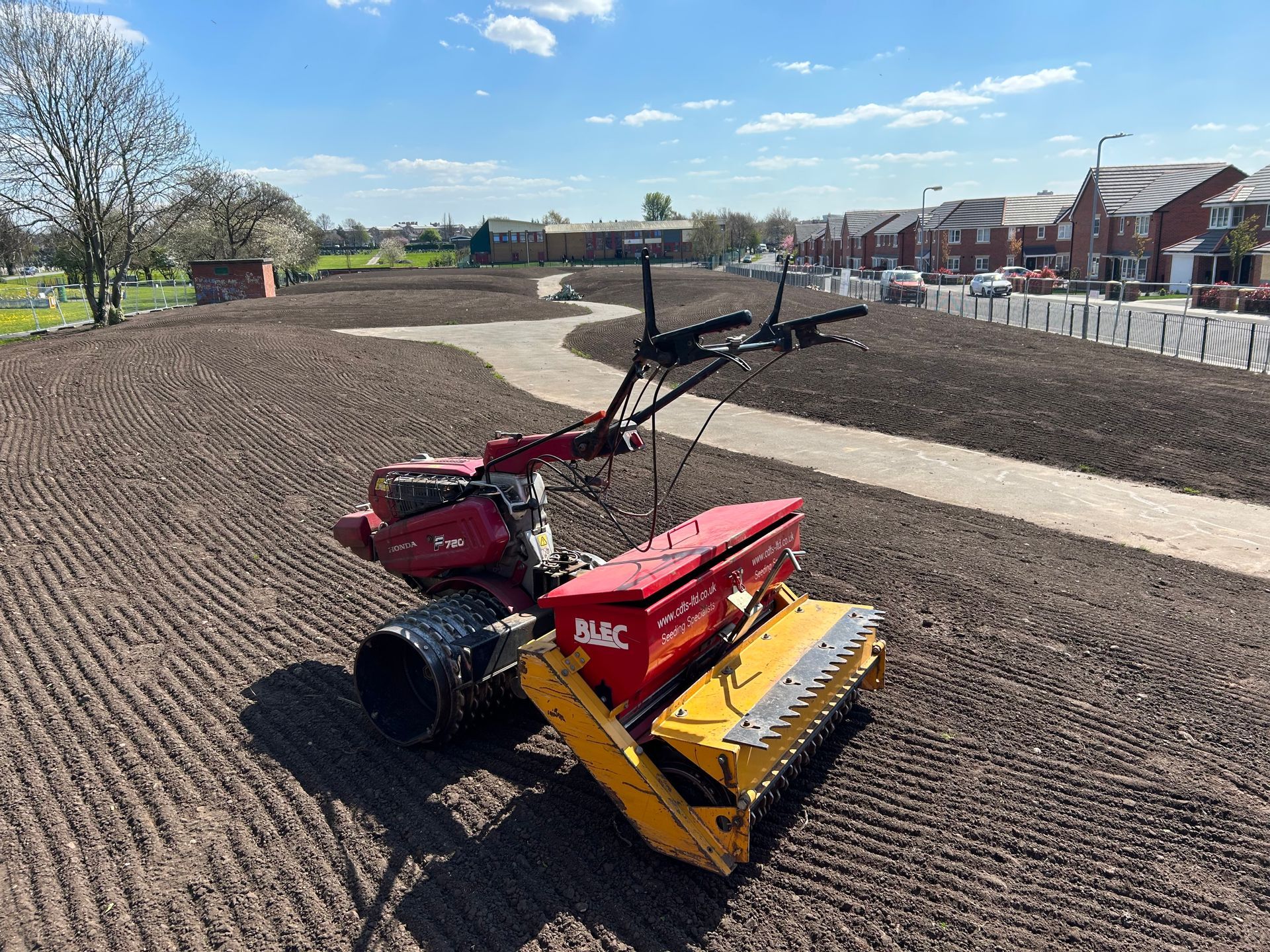
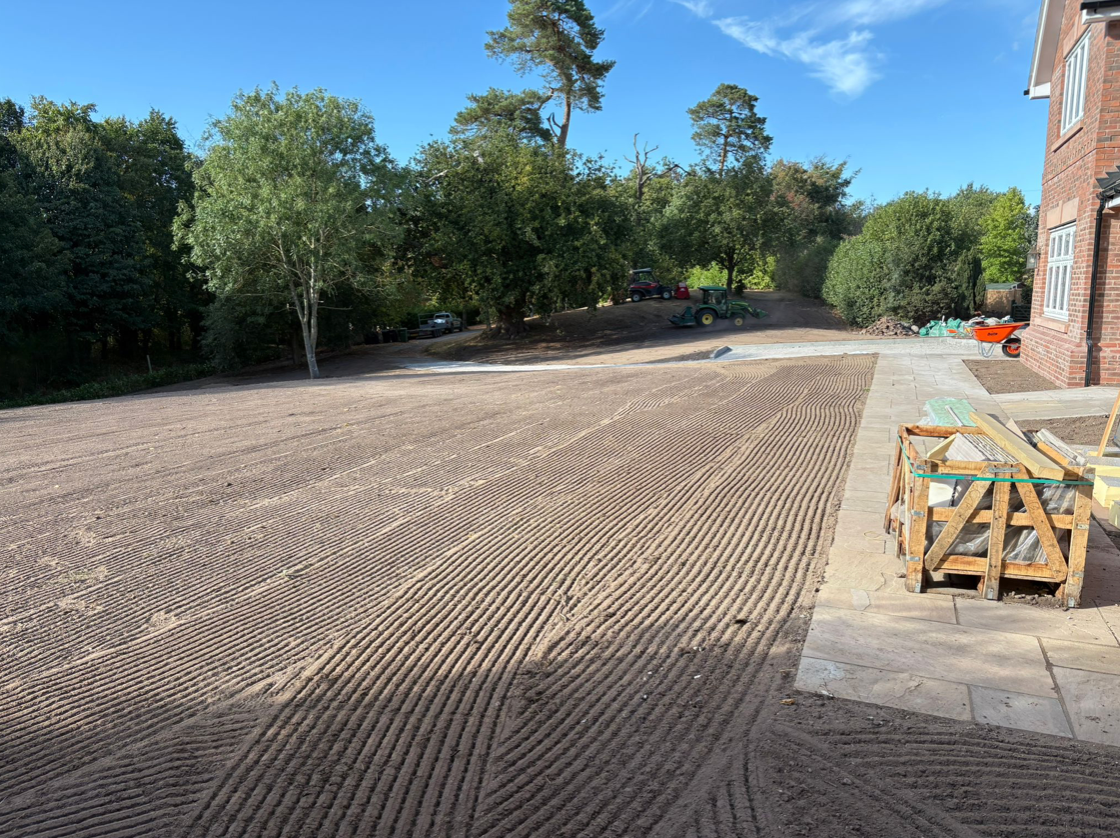
For playing fields, formal lawns and community open space where a uniform, high-quality finish is required, we use conventional drill seeding with Blec Turfmaker precision drills. This ensures even coverage, optimal seed-to-soil contact and consistent establishment suitable for local authority adoption and high-visibility amenity areas.
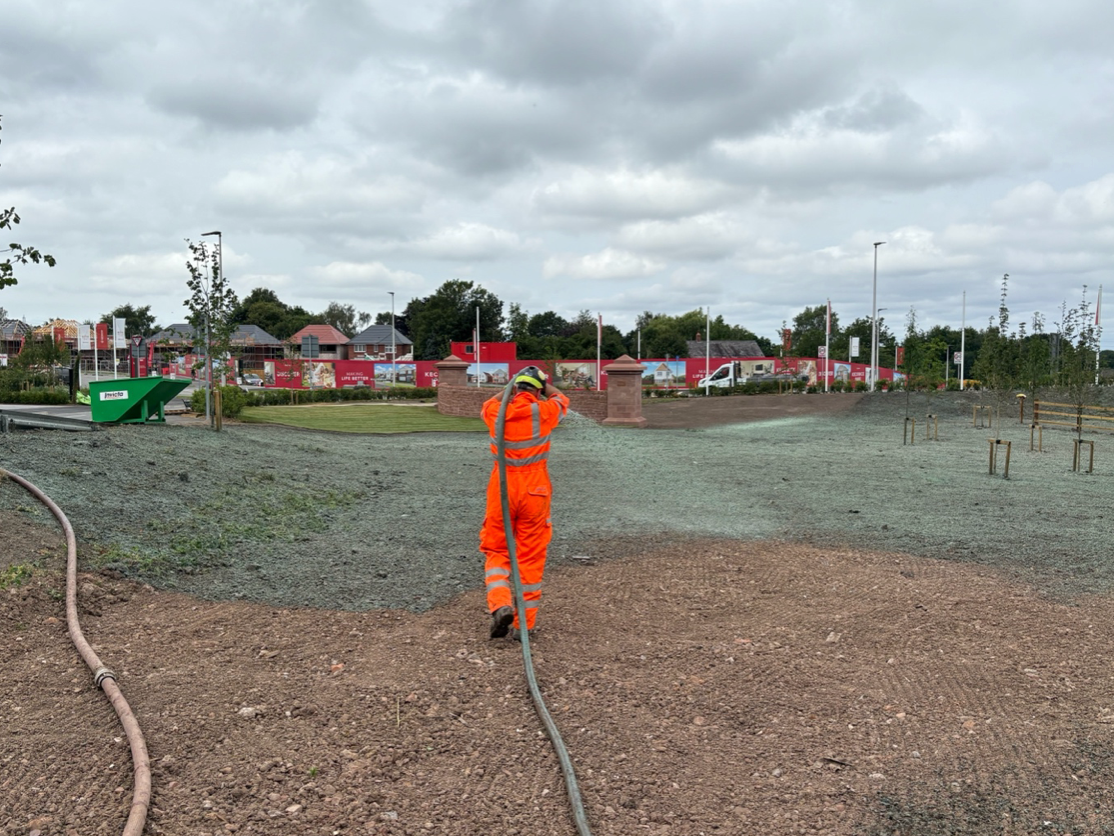
On larger, less formal areas where speed matters more than finish grade, hydroseeding covers ground significantly faster. A 6,000L lorry-mounted hydroseeder treats 2 to 3 hectares per day on typical sites, compared to considerably less with conventional broadcast methods.
View our Conventional Seeding page.
Phased Delivery Across Multi-Zone Sites
Most housing developments we work on require two or more seeding methods across different zones. A typical scope might include BFM on steep SUDS embankments, conventional grass seeding on level public open space, wildflower hydroseeding in BNG habitat areas, and amenity hydroseeding on general slopes and verges.
We programme seeding across construction phases to match your build sequence and seasonal windows, so vegetation establishment keeps pace with the development rather than becoming a bottleneck at handover.
What to Include in Your Development Seeding Tender
The following information lets us price accurately and avoids variations later. If any of these are not yet finalised, send us what you have and we will tell you what else we need.
Site drawings showing areas to be seeded, with m² or hectare quantities for each zone. Slope gradients, particularly on SUDS features and embankments. Seed mix specifications, or confirmation that you need us to recommend mixes. BNG requirements, including the approved Biodiversity Gain Plan and Habitat Management and Monitoring Plan if available. Adoption requirements for SUDS and public open space. Programme dates, including target seeding windows and handover deadlines. Access constraints, including weight restrictions, working hours and any coordination with other trades.
SEEDING SPECIALISTS
CDTS North & West provides development seeding for national house builders including Barratt Homes, Redrow, Persimmon and Bloor Homes. We also work with civil engineering contractors such as Jones Bros, Morgans PLC and VolkerFitzpatrick, and landscape contractors including Landstruction and Ground Control.
The majority of our work comes from repeat business and referrals. Recent development projects include 16 hectares of residential seeding at Bishopton near Glasgow for Morgans PLC, 10,000 m² of seeding and 6,000 plants at Cheshire Green for Jones Bros, and wildflower and amenity seeding at Murphy Construction's new head office in Golborne for Ground Control.
Who We Work With on Development Sites
Capability and Compliance
CDTS North & West has been establishing vegetation on UK housing and commercial developments since 1991. We operate a fleet of 6 hydroseeders, from a 6,000L Finn lorry-mounted unit for large-scale schemes to compact 2,000L towed machines for restricted-access sites. Alongside the hydroseeding fleet, we carry Blec Turfmaker precision drills, Aebi Terratrac slope tractors, and full ground preparation equipment.
We hold CHAS accreditation (membership CHAS-29009949, SSIP Approved Contractor), £5 million public liability insurance and £10 million employers liability insurance. Method statements, risk assessments, insurance certificates and environmental policies are available for tender submissions on request.
Frequently Asked Development Seeding Questions
When is the best time to seed on development sites?
The optimal seeding window for amenity grass runs from late March to early October. Wildflower and BNG mixes typically seed in spring (March to May) or autumn (mid-August to October), depending on the species and soil conditions. We can hydroseed outside these periods using winter-hardy species and protective mulches, but germination slows in colder months. Early consultation lets us align seeding with your phasing and adoption deadlines. For a detailed seasonal guide, see Best Time to Hydroseed in the UK.
How quickly can vegetation establish for adoption?
Under optimal growing conditions, visible germination typically occurs within 7 to 14 days during the UK growing season. Target coverage of 80% or above is usually achievable in 8 to 12 weeks under good conditions. SUDS ponds and amenity areas often require a 12-week establishment period before local authority inspection. We work backwards from your adoption deadline to determine the latest viable seeding date.
How much does hydroseeding cost on development sites?
Amenity grass hydroseeding typically costs £0.30 to £0.85 per m². Wildflower and BNG mixes cost £0.45 to £0.90 per m². As a benchmark, a typical 5,000 m² housing development covering public open space and embankments costs £1,500 to £4,250. Hydroseeding is significantly cheaper than turfing (£15 to £25 per m²) and faster to install than erosion control blankets (£8 to £12 per m²). See our hydroseeding pricing guide for current per-m² rates and worked examples.
Can you deliver different seeding methods across different zones of the same site?
Yes. Most housing developments need more than one approach. CDTS North & West delivers hydroseeding, conventional drill seeding, wildflower and BNG seeding, direct tree seeding, and BFM erosion control from a single appointment. This reduces coordination between trades and gives the developer or main contractor one point of contact for the entire vegetation scope.
What documentation do you provide for handover and BNG monitoring?
We supply method statements, risk assessments, material safety data sheets, seed mix specifications and application records for every project. For BNG work, we provide post-implementation reports detailing species sown, provenance certificates, application rates and photographic records. These documents support adoption applications, ecological monitoring submissions, and contractor vetting requirements.
Do you work across the whole UK?
Yes. CDTS North & West is based in Cheshire and delivers development seeding projects UK-wide. Recent projects span Glasgow, the North West, North Wales, the Midlands, North Yorkshire and the South East. Mobilisation is costed per project based on access and travel distance. See our service area page for regional details.
Discuss Your Development Project
Send us your site drawings, seed mix specifications and programme dates. We will review access and ground conditions, recommend the right seeding method for each zone, and provide a fixed quote for the work.