Hydroseeding

SEEDING SPECIALISTS

Specialist hydroseeding for highways, rail, housing, quarries and land reclamation: designed for erosion control, BNG compliance and programme certainty


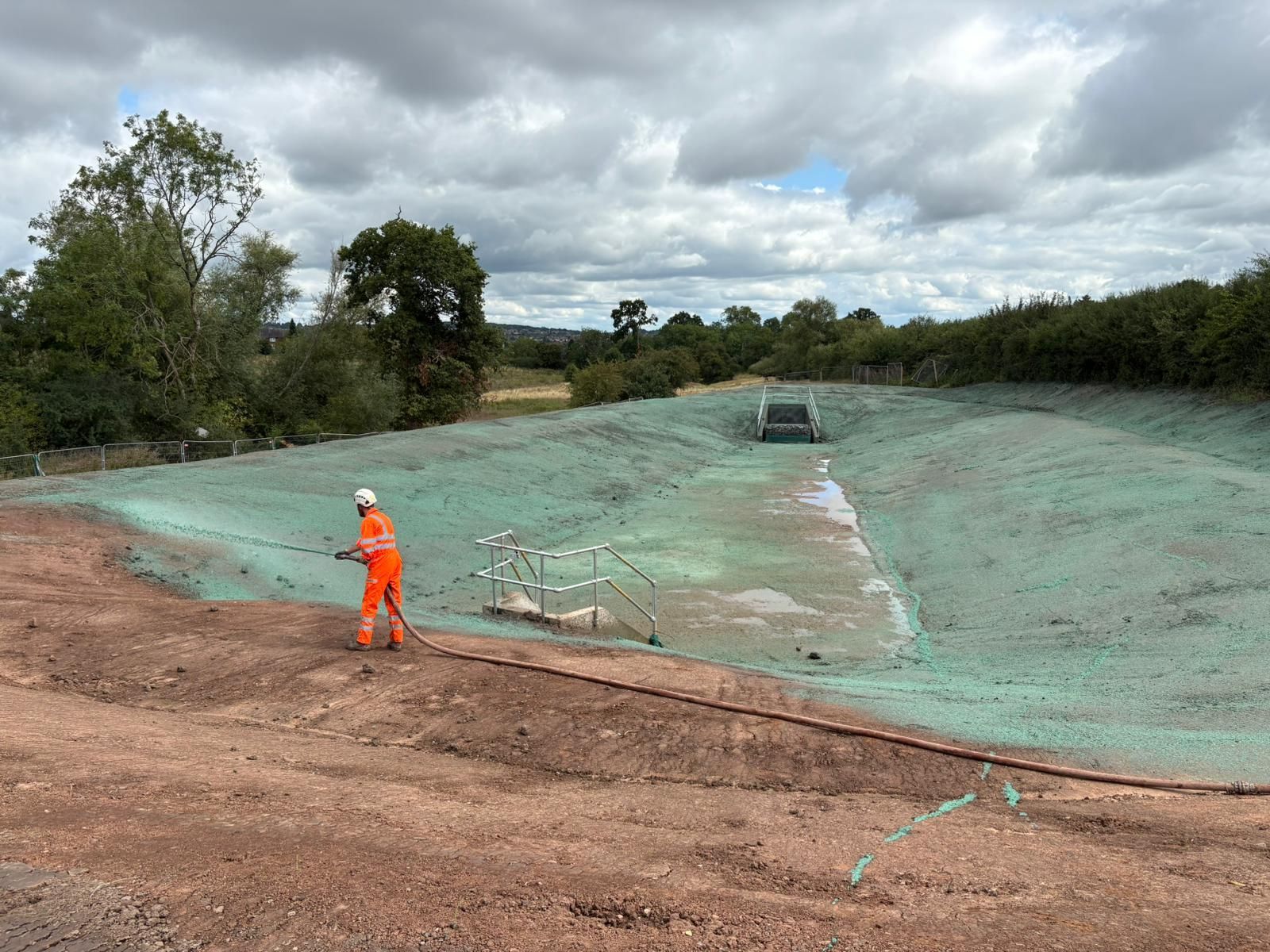
For more than 30 years we’ve delivered large-scale hydroseeding across the UK, from new bypasses and embankments to dams, landfills and business parks. Our fleet of six hydroseeders, including a 6,000L lorry-mounted unit and 2,500L towed machine, lets us cover everything from flat batters to steep, restricted access slopes efficiently and safely.
What Hydroseeding Delivers On Site

Hydroseeding establishes dense, uniform vegetation faster than broadcast seeding or manual methods, typically delivering 95% cover within 6–8 weeks. The sprayed mulch locks seed to the soil surface, shields against rainfall and wind, and maintains moisture through germination. Preventing the seed wash away common with conventional methods on slopes.


Programme Protection

Black arrow pointing to the right.

Hydroseeding covers large areas quickly. A single 6000L tank load treats approximately 2,000-3,000m² in one pass. For projects with tight handover dates, this speed reduces the gap between earthworks completion and vegetation establishment.


Erosion Control

Black arrow pointing to the right.

The mulch component bonds to the soil surface, reducing runoff velocity and protecting seed until root systems develop. For high-risk slopes, we apply Bonded Fibre Matrix (BFM), a spray-applied erosion blanket that delivers immediate protection without manual installation.


Cost Predictability

Black arrow pointing right.

Hydroseeding is priced per square metre with minimal variation. Unlike erosion blankets, there are no installation labour variables. Coverage rates are consistent and measurable, making budget forecasting straightforward.


Where Hydroseeding Fits On Your Project

Hydroseeding is the default vegetation method for sites where speed, scale, or difficult terrain make conventional seeding or turfing impractical. It's the proven solution when you need to vegetate several hectares in days rather than weeks, when slopes are too steep for safe manual seeding, or when ground conditions won't support turfing equipment.

Whether you're managing highway slopes that require rapid erosion protection, restoring extractive sites with challenging substrates, or delivering SUDS infrastructure that must meet adoption standards, hydroseeding reduces programme risk and provides consistent results across varied ground conditions.

The method is particularly effective on linear infrastructure schemes, large-scale land restoration projects, and sites with restricted access where mobilising multiple seeding teams would be inefficient or create additional H&S risk.

Highway & rail embankments

Steep slopes (up to 45°) where conventional seeding or turfing is impractical or unsafe

SUDS ponds and basins

Rapid grass establishment on pond sides and bases to prevent erosion and meet adoption standards

Landfill restoration

Cost-effective vegetation of capped landfill domes and perimeter slopes

Quarry reclamation

Large-scale revegetation of benches, spoil heaps and quarry floors

Housing and commercial POS

Fast establishment for SUDS, attenuation basins and public open space to support adoption and sales progression.

Logo of DLF Seeds & Science: Green square with grass design, black text
Tarmac logo with a blue circle, blue text, and the tagline
Barclaycard logo with a blue and silver globe graphic on the left and the words
United Utilities logo with a green
Cheshire East Council logo with green and gold wheat stalks and text.
Birmingham Airport logo: Circle of blue lines with “Birmingham Airport” text.
Balfour Beatty logo in dark blue font.
RHS logo with a tree and initials in green.

Why Choose CDTS for Your Project?

Hydroseeding fails when contractors lack the right equipment, use generic specifications, or can't deliver to programme. CDTS removes these risks with a specialist fleet, site-specific technical planning, and 30 years of proven delivery across the UK's construction sector.


10 million m² seeded

Our team has delivered hydroseeding across motorways, A-roads, flood alleviation schemes, dams, wind farms, quarries and major housing developments for over 3 decades


30+ years experience

CDTS North & West holds CHAS accreditation and carries £5 million public liability and £10 million employers liability insurance. Full RAMS provided for every project.

6 hydroseeders

We operate six hydroseeders, from a 6,000L truck-mounted unit for major contracts to 2,500L towed machines for restricted access. That means we can treat large areas quickly while still reaching difficult slopes, batters and remote corners of the site.


How Our Hydroseeding Process Works

01

Site appraisal & specification

We review drawings, slopes, soil type and access, then agree seed mixes, mulch rates and application areas with your team.

02

Ground preparation

We check that soil quality, compaction and surface condition meet the specification, and can provide conventional cultivation where needed.

03

Mixing the slurry

In the hydroseeder tank we combine water, binder, mulch and seed to the specified rates, agitating continuously for a consistent slurry.

04

Application

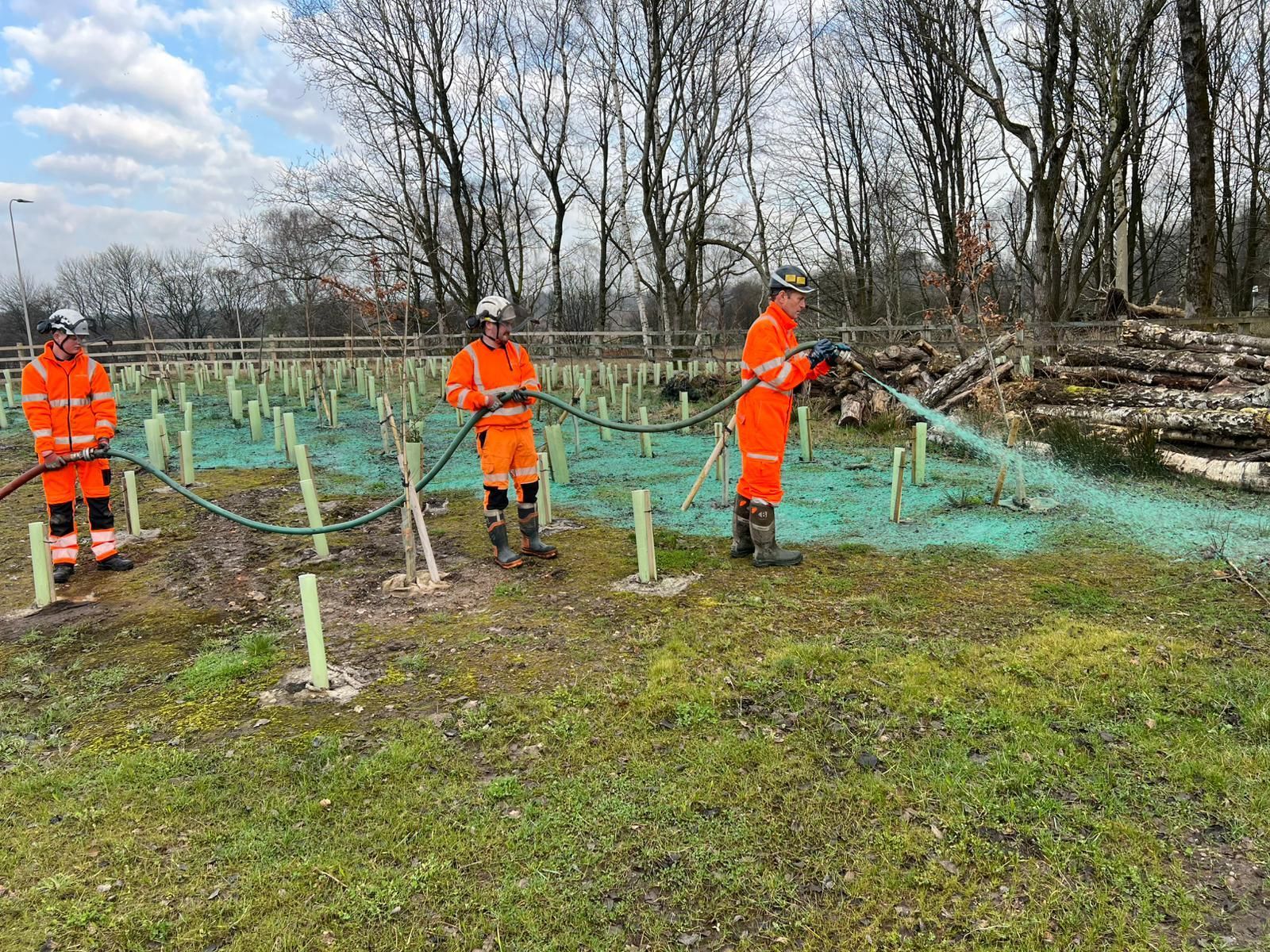
The slurry is sprayed evenly by canon or hose, with overlapping passes to achieve uniform coverage and correct application rates.

Recent Hydroseeding Projects

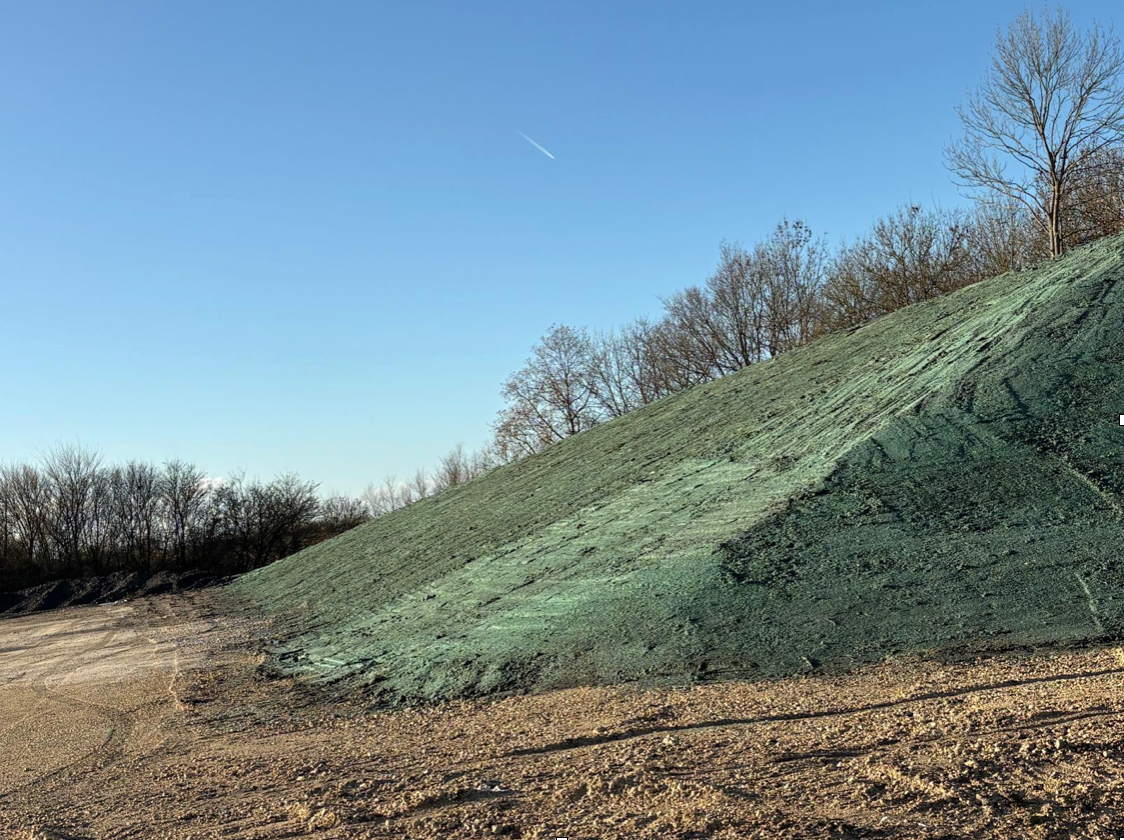
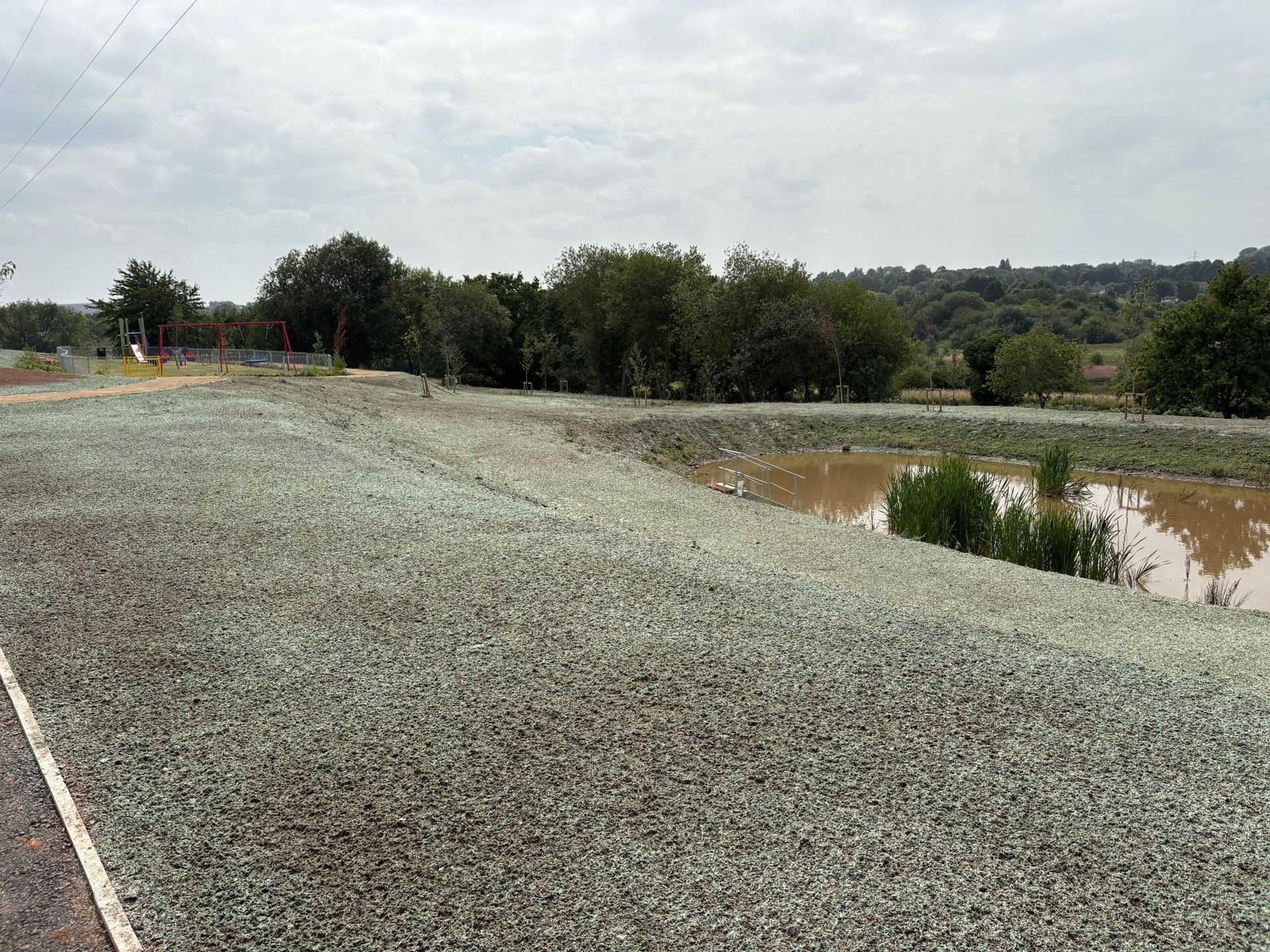
Jones Bros Civil Engineering – Thorpe Marsh Battery Energy Storage Site

50,000 m² of steep, highly erodible banks hydroseeded for erosion control on new battery storage facility. Works completed in November, achieving germination within 10 days despite unfavourable late-season conditions.


Yorkshire,

November 2025

Green-covered hillside with sparse trees under a clear blue sky. Earthy foreground.

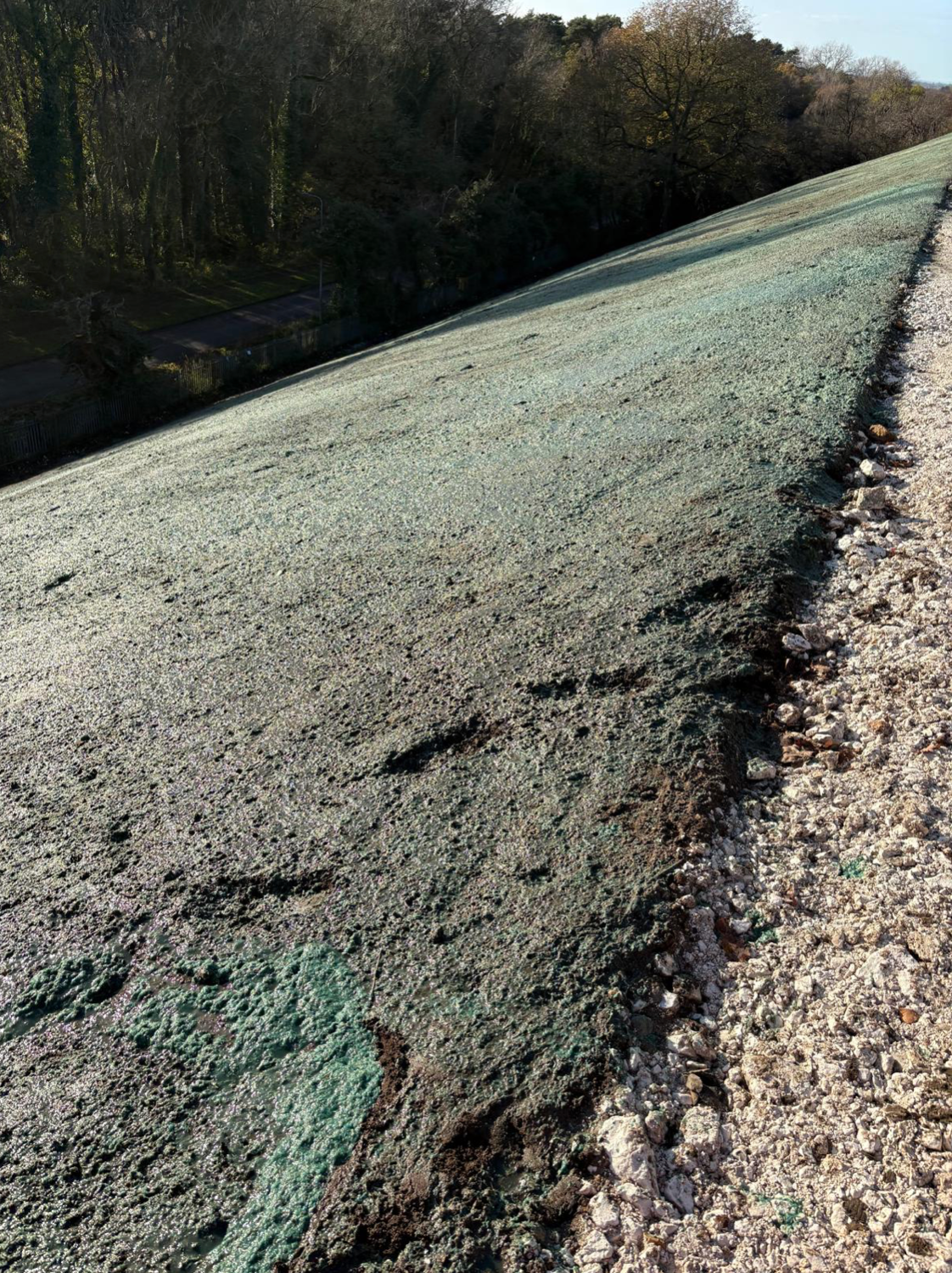
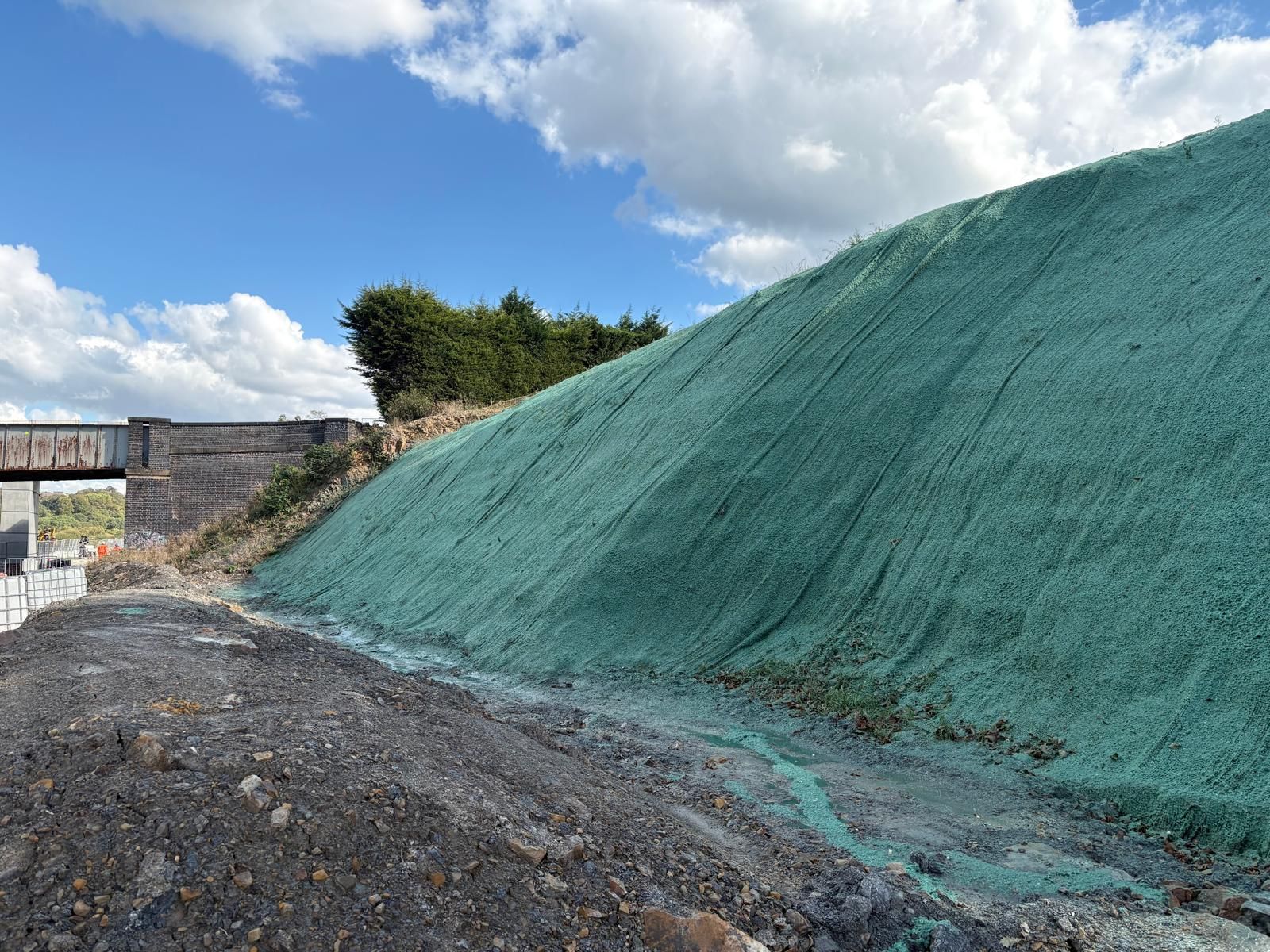
Story Rail – Frodingham Rail Embankment

8,000 m² rail embankment hydroseeded adjacent to live railway. Project required specialist access management and extended hose runs to reach very steep slopes while maintaining operational safety around active rail infrastructure. Works delivered within tight access windows and railway possession constraints.


Lincolnshire,

October 2025

Green erosion control blanket covering a sloped surface, next to a gravel path, with a treeline in the background.

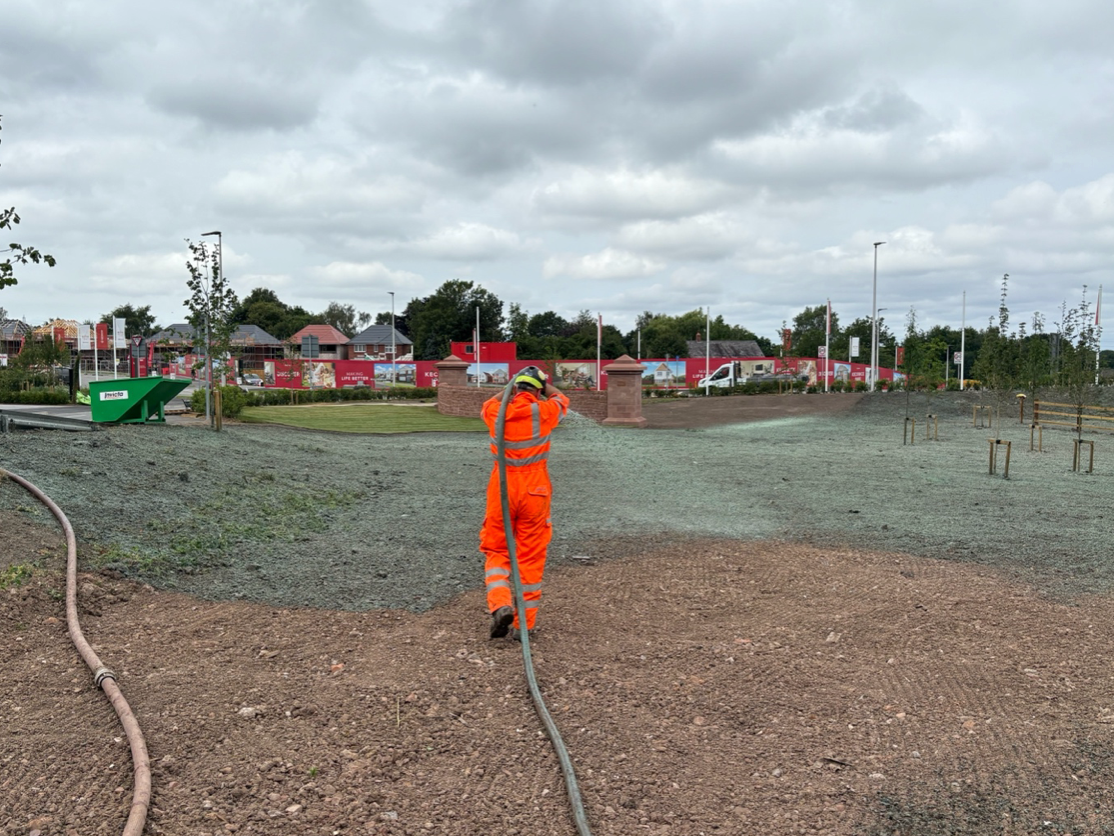
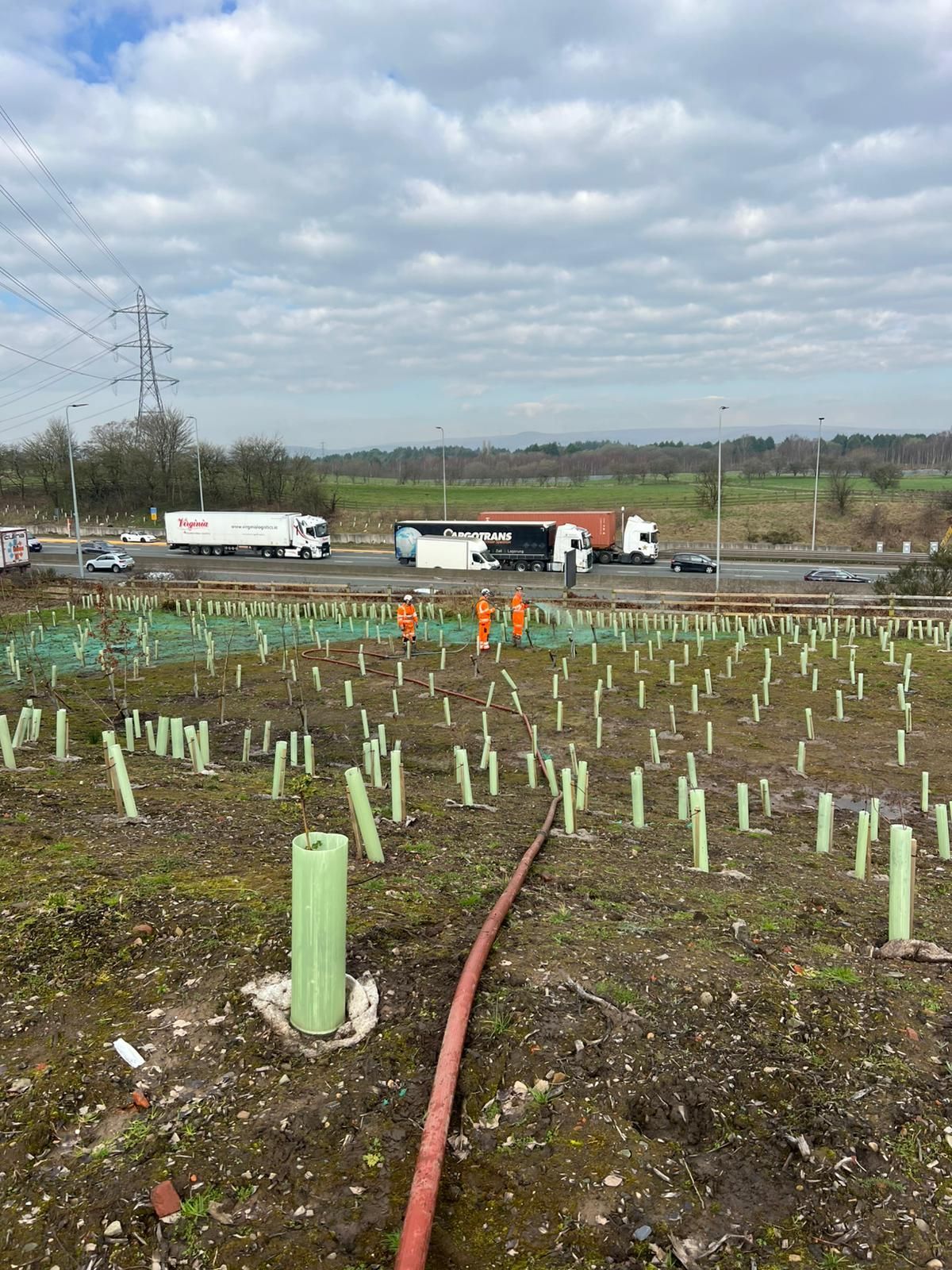
Landstruction (Redrow) – Daresbury Housing Development

3,000 m² of development banks and SUDS pond slopes hydroseeded with green mulch for immediate visual impact ahead of director site visit. Combined hydroseeding with wildflower/BNG seeding across public realm areas to support planning requirements and sales environment. Works delivered to tight deadline with instant green appearance achieved.


Warrington

October 2025

Construction worker in orange suit spraying a newly planted lawn area with a hose. Overcast sky.
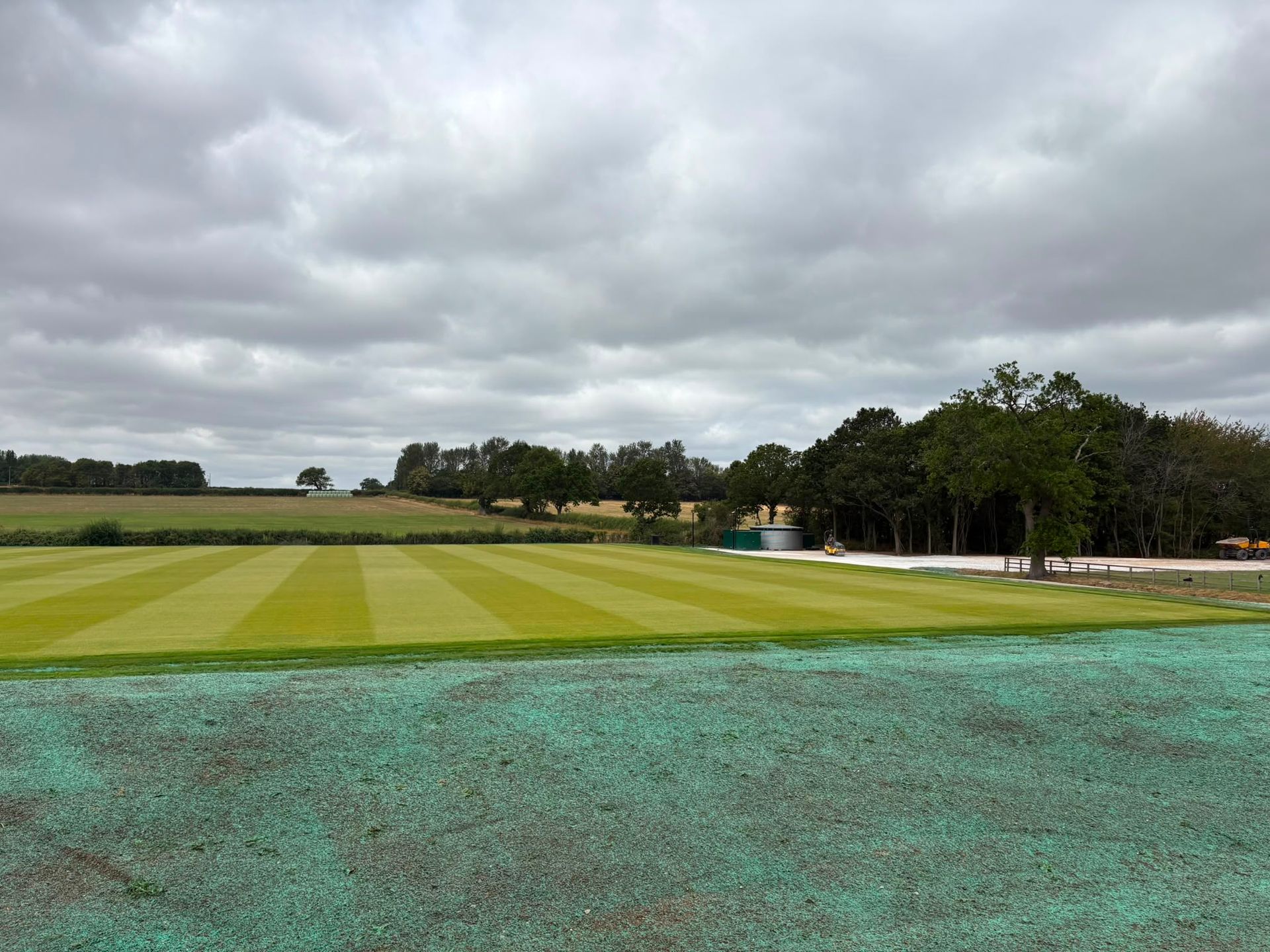
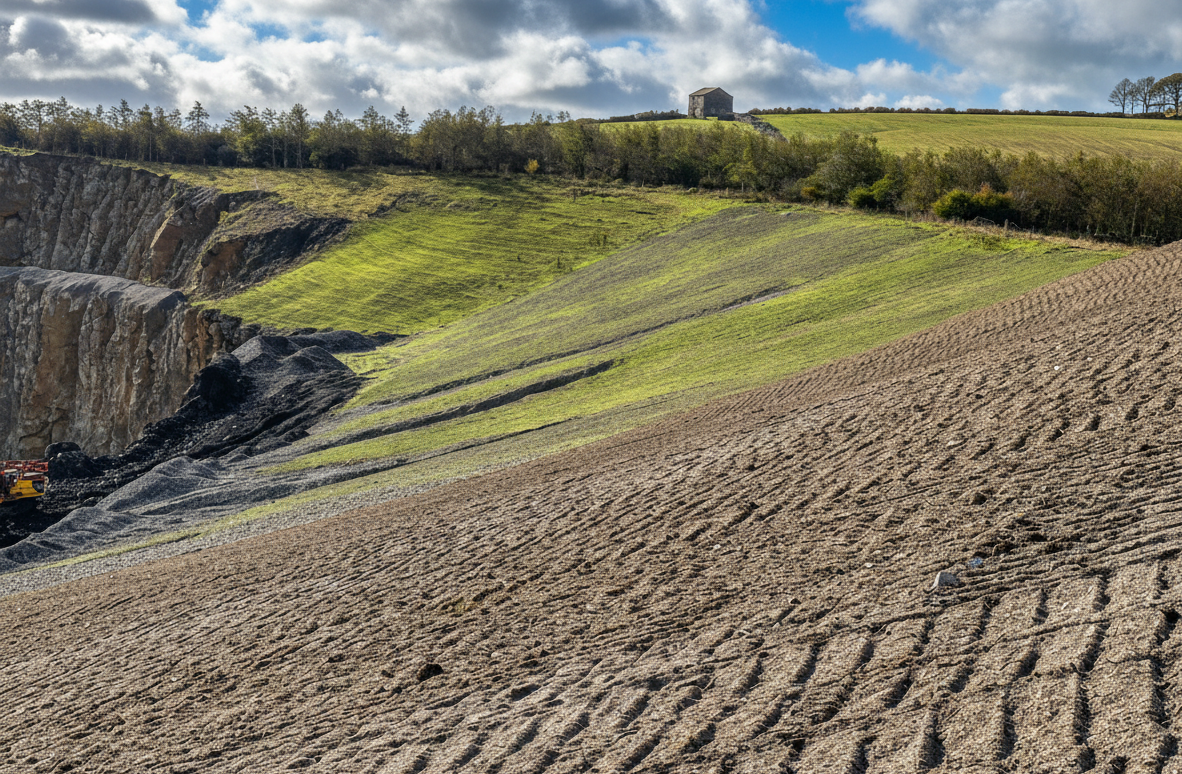
Quarry landscape: bare earth in foreground, green hillside with trees, and distant building under a cloudy sky.

Tarmac - Swinden Quarry Land Reclamation

60,000 m² of steep limestone quarry slopes (1:2.5 gradient) hydroseeded for stabilisation and ecological restoration within a National Park. Germination achieved within 2 weeks despite challenging substrate and autumn conditions.


North Yorkshire,

November 2025


Discuss Your Project With Our Technical Team