
Wildflower & BNG Seeding Contractors UK
Specialist wildflower and BNG seeding for housing developers, councils, infrastructure schemes and ecological restoration
CDTS North & West delivers wildflower and Biodiversity Net Gain (BNG) seeding on projects from 2,000 m² housing schemes to 30 ha habitat banks across the UK.
We work to ecologist-approved habitat plans, selecting hydroseeding, conventional drilling or brush-harvested seed based on terrain, programme and target habitat. Installed rates typically range from £0.45 to £0.90 per m² for wildflower hydroseeding, with projects live in England, Scotland and Wales.
What Wildflower & BNG Compliance Delivers On Site
Wildflower and BNG seeding creates species-rich grassland that supports pollinators, meets mandatory Biodiversity Net Gain requirements under the Environment Act 2021, and delivers long-term ecological value at a fraction of wildflower turf cost.
Native seed mixes establish permanent plant communities matched to local soil and climate, producing Defra-metric-compliant habitat that scores as Other Neutral Grassland rather than Modified Grassland, which lifts the biodiversity unit value the scheme generates.
BNG compliance to Defra metric standards
Habitats established to the Statutory Biodiversity Metric, supporting the mandatory 10% net gain that major and small-site developments have required since February and April 2024. We work from the ecologist's Biodiversity Gain Plan and Habitat Management and Monitoring Plan (HMMP), specifying seed mixes, application methods and establishment protocols that give the scheme the best chance of reaching target condition inside the 30-year management period.
Pollinator habitat at scale
Native wildflower communities provide nectar and pollen from March through September, supporting the 45% of UK flora found on verges and meadows and the declining bee, butterfly and hoverfly populations tracked by the UK Pollinator Monitoring Scheme. The UK has lost roughly 97% of its species-rich meadows since the 1930s (Fuller, 1987; confirmed Hooftman & Bullock, 2012), which is why well-established wildflower grassland now carries material ecological value on a planning balance sheet.
Long-term maintenance savings
Correctly established meadows replace weekly amenity mowing with one or two annual cuts. Rotherham's "River of Flowers" programme cut verge mowing costs from roughly £80,000 to £55,000 a year after conversion. Dorset Council reported a 45% saving in rural verge maintenance within seven years of moving to cut-and-collect management. For a housing developer or council, that is a real reduction in the 30-year management liability attached to the BNG obligation.
Where Wildflower & BNG Seeding Fits On Your Project
Wildflower and BNG seeding applies wherever a development has to deliver on-site biodiversity net gain, create compensatory habitat, or establish permanent ecological value off-site. The method suits sites from urban verges to multi-hectare habitat banks, on flat amenity land or engineered slopes. We tailor seed mixes, application methods and first-year management to site conditions, planning conditions and adoption specifications.
BNG-compliant meadow creation on amenity land, public open space, attenuation basins and buffer zones. We hand the developer evidence of seeding rates, mix provenance and application records that support Biodiversity Gain Plan sign-off at handover.
Species-rich grassland around attenuation ponds, swales and flood banks. Delivers habitat value, stabilises banks against erosion during establishment and filters surface runoff.
Large-scale meadow creation on registered biodiversity gain sites. Hydroseeding covers 2 to 3 hectares a day, shortening the time to target condition and improving the metric's spatial and temporal risk multipliers. We have delivered this work directly for Environment Bank.
Native wildflower establishment on cuttings, embankments and verges. Creates biodiverse corridors across the 500,000 km of UK rural verge network while reducing long-term mowing cost.
Urban wildflower meadows for local authorities, housing associations and estates, balancing pollinator habitat with visual amenity and public access. Long-running programmes with Solihull Metropolitan Borough Council since 2016.
Landfill caps, quarries, mineral workings and brownfield restoration where species-rich grassland is specified as part of the after-use plan.
Inter-row and under-panel wildflower establishment on ground-mounted solar farms, delivering the habitat units needed for LEMP compliance and 30-year BNG obligations. Hydroseeding reaches 30 to 75 m+ into panel rows where conventional equipment cannot operate, ensuring uniform distribution of expensive wildflower seed mixes across the largest seeding area on any solar site.
Wildflower and ecological reinstatement on access tracks, borrow pits, cable routes and construction compounds across upland and rural wind farm sites. Species-rich grassland mixes restore disturbed ground to ecological condition, supporting CEMP discharge and habitat objectives specified by the project ECoW.
Wildflower meadow and wetland margin seeding on flood storage basins, channel realignments and floodplain creation areas where BNG compliance is specified alongside the primary flood defence function. Native seed mixes suited to periodic inundation establish habitats that score well on the Statutory Biodiversity Metric while meeting EA and NRW handover standards.
seeding specialists
There are three ways to establish wildflower habitat at construction scale: hydroseeding, conventional drill or broadcast seeding, and wildflower turf. Each has a legitimate use case, but on cost and slope capability the difference is significant.
Wildflower Seeding Methods Compared
| Wildflower Hydroseeding BNG-compliant, scalable | Conventional Drill / Broadcast Flat, accessible sites | Wildflower Turf Instant visual cover | |
|---|---|---|---|
| Cost / m² | £0.45–£0.90 | £0.20–£2.00 | £15–£25 |
| Daily coverage | 2–3 hectares | 1–2 hectares | 0.2–0.5 hectares |
| Max slope | 1:1 (45°) with BFM | 4:1 (14°) | 4:1 (14°) |
| Erosion protection | Immediate (mulch matrix) | Limited until established | Immediate (full cover) |
| Visible cover | 2–4 weeks germination | 2–4 weeks germination | Day of installation |
| Typical labour | 2–3 operatives | 4–6 operatives | 6–10 operatives |
| Best for | Large or sloping sites, habitat banks, difficult access, programme-driven BNG schemes at scale | Flat, accessible sites with good machinery access and fully prepared seedbeds | Small amenity spaces where immediate visual cover matters more than area cost |
Wildflower hydroseeding is the only method that combines large-area coverage, access to steep terrain and immediate erosion protection from the mulch matrix. It is not faster-germinating than conventional seeding, but it delivers uniform seed distribution across irregular areas and it does it quickly, which matters when the BNG seeding window closes.
Wildflower turf is a legitimate option for small, prominent amenity areas. It is not a serious option at habitat-bank or BNG-at-scale pricing. A 5 ha housing scheme BNG parcel at £20 per m² turf is £1 million. At £0.70 per m² hydroseeding, the same parcel is £35,000. That cost delta is why habitat banks and infrastructure schemes seed rather than turf.
Habitat Types We Seed To Specification
CDTS North & West seeds to the habitat types typically specified in Biodiversity Gain Plans and ecological mitigation strategies. Selection depends on soil nutrient status, hydrology and target NVC community, and should be confirmed with the project ecologist before commissioning.
Seed is sourced from reputable UK suppliers with species lists and provenance certificates supplied to the client for metric and planning records. For schemes requiring local genetic provenance, we can harvest seed from a nominated donor site using our own brush harvester.
MG1 and MG1e Coarse Natural England
Suited to more fertile sites and road verges where full MG5 conditions cannot be achieved. Still counts as Other Neutral Grassland in the metric.
MG5 Lowland Meadow (Cynosurus cristatus – Centaurea nigra)
The most commonly targeted community for species-rich grassland creation. Suits well-drained mesotrophic soils at pH 5.0 to 6.2 with low to moderate fertility. Classed as Other Neutral Grassland in the Defra metric, generating higher biodiversity unit value than Modified Grassland. Priority Habitat under Section 41 of the NERC Act.
MG4 Floodplain Meadow (Alopecurus pratensis – Sanguisorba officinalis)
Specialist floodplain community on moist but not waterlogged soils with seasonal flooding. Rare and high-value where site conditions support it.
Calcareous grassland on chalk and limestone
Specified on exposed cuttings and restored quarries. CDTS North & West has delivered calcareous wildflower seeding that has remained biodiverse for more than 20 years on the A419 Cirencester Bypass.
Wet grassland and attenuation basin margins
Low-lying seed mixes for SUDS basins, swales and wetland margins, often combined with plug planting to accelerate establishment.
Amenity and verge mixes
Pollinator-friendly mixes for parks, estates and verges where visual amenity and pollinator value are weighted alongside ecological distinctiveness.
How Our Wildflower & BNG Seeding Process Works
01
Site assessment & specification
We review drawings, Biodiversity Gain Plan, ecologist's HMMP and site access, then specify seed mix, application rate, method and establishment protocol. Where the scheme is still at design stage, we can flag whether the proposed on-site habitat is realistic given ground conditions before it becomes a planning condition.
02
Ground preparation
Wildflowers establish best on low-fertility, weed-suppressed seedbeds. Following Natural England guidance TIN067, we use stale seedbed techniques, multiple cultivations to exhaust the weed seed bank, and a fine, firm tilth. On fertile sites we may recommend topsoil stripping or a subsoil seedbed to reduce nutrient loading.
03
Seed sourcing & application
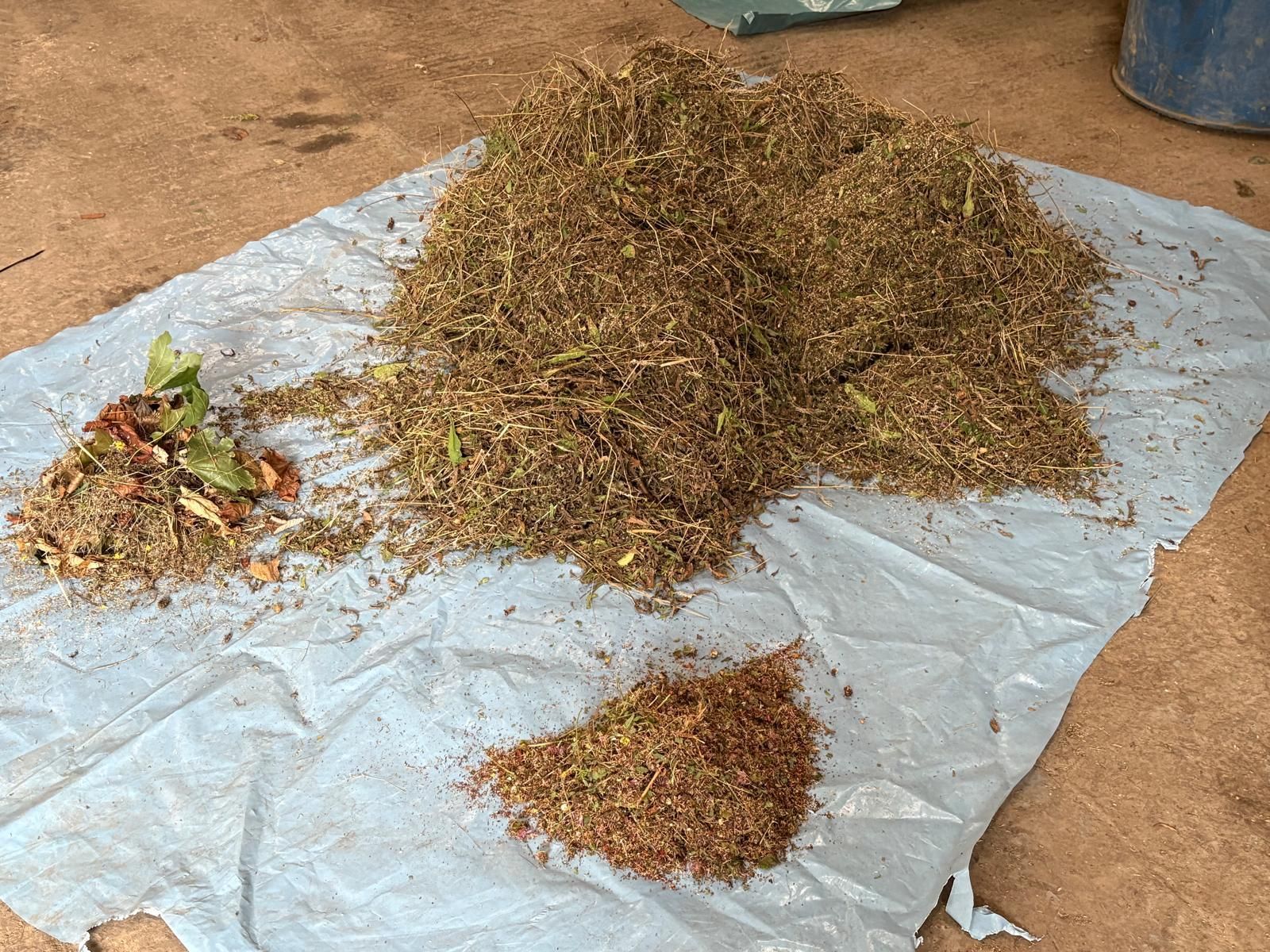
Native UK seed is supplied from reputable suppliers with provenance certification, or harvested from donor sites using our brush harvester for local-genetic schemes. Wildflower seed rates are 1 to 2 g/m² for pure wildflower mixes and around 4 g/m² for 80:20 grass and wildflower meadow mixes, applied below conventional amenity rates of 35 to 40 g/m² to prevent grass dominance. Hydroseeding is used for slopes and large areas. Conventional drill or broadcast seeding is used on accessible flat sites. Surface sowing followed by rolling is standard practice in line with BS 4428:1989.
04
Establishment monitoring and handover
First-season management controls meadow quality. We advise on timing of the first cut, spot-control of docks, thistles and ragwort, and monitoring for compliance evidence. Handover pack includes seed certificates, application records and photographic evidence to support Biodiversity Gain Plan sign-off and the HMMP monitoring schedule.
Why Choose CDTS North & West For Your Project
Wildflower projects fail when contractors skip seedbed preparation, apply grass-dominant mixes at amenity rates, or fail to manage first-year competition. The December 2024 Lost Nature report surveyed 42 housing developments and found 82% of woodland-edge seed mixes failed to materialise on site. On BNG, a failed meadow is not a snagging item. It forces the shortfall back up the compliance ladder into off-site units at around £24,000 to £30,000 per neutral grassland unit, or statutory credits priced from £42,000 upwards.
CDTS North & West reduces that risk through 30-plus years of specialist seeding experience, a fleet and technical approach built specifically for difficult sites, and a compliance footprint that stands up to procurement vetting.
Full method flexibility across six hydroseeders
We operate six hydroseeders including a 6,000 L Finn lorry-mounted unit, a 4,000 L Finn trailer-mounted unit and four twin-axle towed units from 2,000 L to 3,500 L. That range lets us mobilise the right unit for site access rather than forcing one machine onto every job. We also run conventional drill seeding, broadcast seeding and brush-harvested seed application for local-provenance schemes.
Seedbed preparation capability
Our fleet includes an Aebi TT275 low ground pressure slope tractor, power harrows, stone buriers, rotovators and Blec pedestrian drills, all self-delivered on two 18 ft Ifor Williams trailers. We prepare the seedbed, reduce fertility where specified, and seed within a single mobilisation. Soil testing is recommended before seeding on higher-risk sites and can be arranged.
Compliant, insured, vetted
CDTS North & West holds CHAS accreditation (SSIP Approved Contractor status) and carries £5 million public liability, £10 million employers liability and £350,000 contractors all risks insurance. Full RAMS, COSHH and method statements are issued for every project. We have been delivering ecological seeding contracts for Tier 1 contractors, house builders, local authorities and habitat bank operators since 1991.
We have collaborated for many years with CDTS on a whole range of seeding projects covering conventional seeding, hydroseeding and wildflower seeding for BNG enhancement. Extremely professional with highly experienced and qualified teams. Great communication, flexible and reactive service!
Paul Hadley
November 2025
We engaged with CDTS for the hydroseeding across 4000 square metres of banks at a project in Blyth for Stainforth Construction. The team responded quickly and communication was good. Despite a small machinery hiccup, the hydroseeding was completed on time in just one day. Good service, good communication throughout, and completed professionally, on time. Seeds are just starting to germinate, we will update progress when we return to site.
J Paxman Landscapes
February 2026
I’ve used CDTS Seeding for many years, using both amenity and bespoke wildflower seed mixes across hydroseeding and conventional seeding projects. Their attention to detail and genuine desire to create the best possible finish really sets them apart.
Professional, reliable, and consistently excellent. Highly recommended for anyone needing quality seeding work.
Ant Brown
November 2025






Indicative Wildflower & BNG Seeding Costs
Wildflower hydroseeding is typically installed at £0.45 to £0.90 per m², with the exact rate driven by site access, slope, seed mix specification and whether Bonded Fibre Matrix (BFM) is required for steep or exposed faces. Day rates apply on sites under 2,000 m². Full cost ranges and worked examples are on the hydroseeding cost page.
For context on the commercial case for on-site delivery, off-site BNG units currently trade at approximately £24,000 to £30,000 per neutral grassland unit on the open market. Statutory credits, priced as a last resort, start at around £42,000 per unit and rise above £600,000 depending on habitat type and spatial risk multiplier. Successfully establishing on-site wildflower habitat usually avoids both.

Recent Wildflower & BNG Seeding Projects
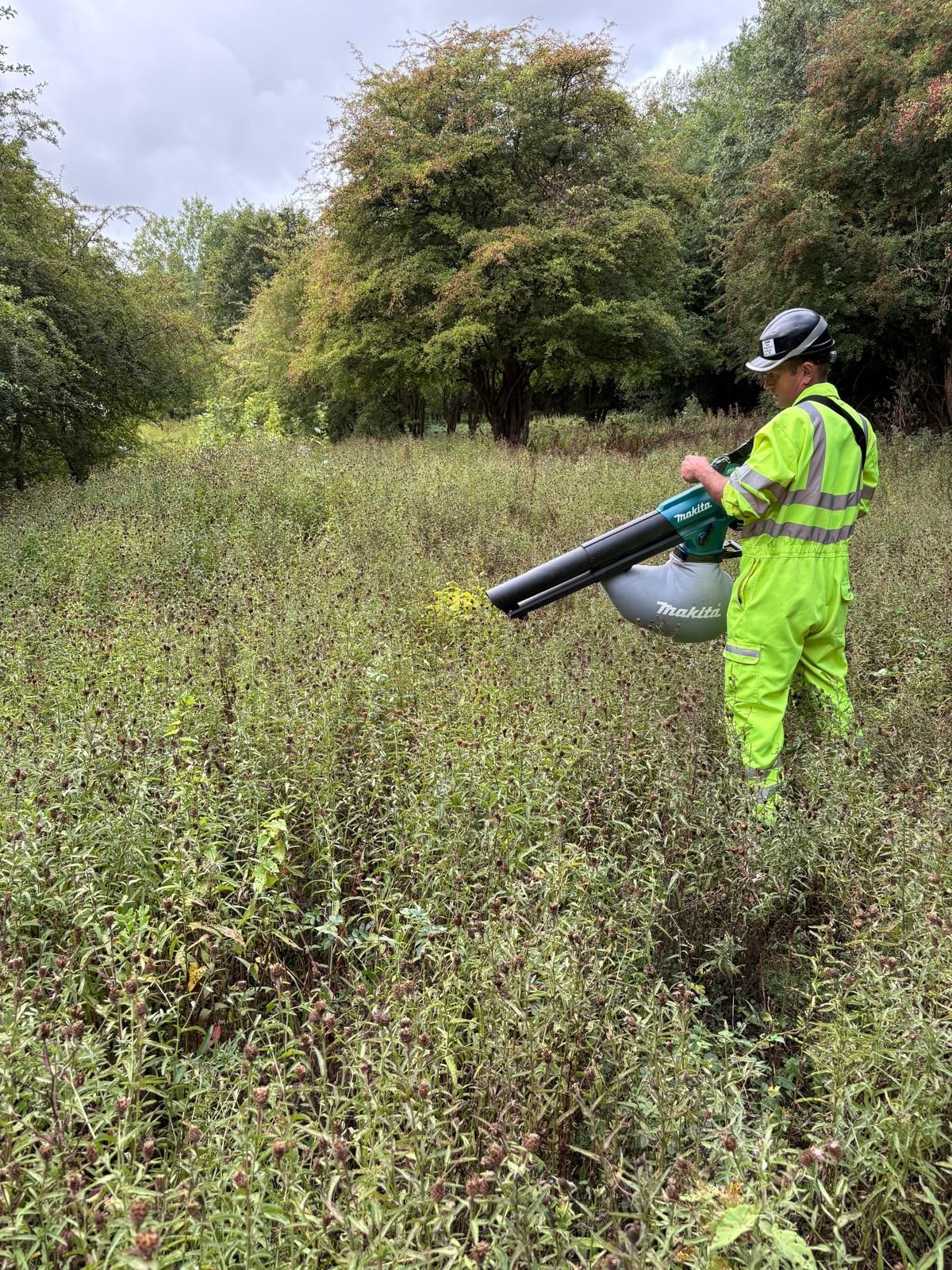
Wistow Estate, Leicester: BNG habitat creation for Environment Bank
Problem: Two wetland meadow parcels on a registered habitat bank required wildflower grassland establishment for formal BNG unit registration. Access was constrained by soft ground across the wetland cells.
Solution:
Conventional seeding to an ecologist's Habitat Management Plan, using a low ground pressure Aebi Terratrac with front and rear cultivators to prepare and seed the parcels without ground damage.
Result: Wildflower grassland established across both parcels. Units registered on the statutory Biodiversity Gain Sites Register.
Client: Environment Bank
Location: Wistow Estate, Leicester
Scale: 15 ha across 2 wetland meadow parcels
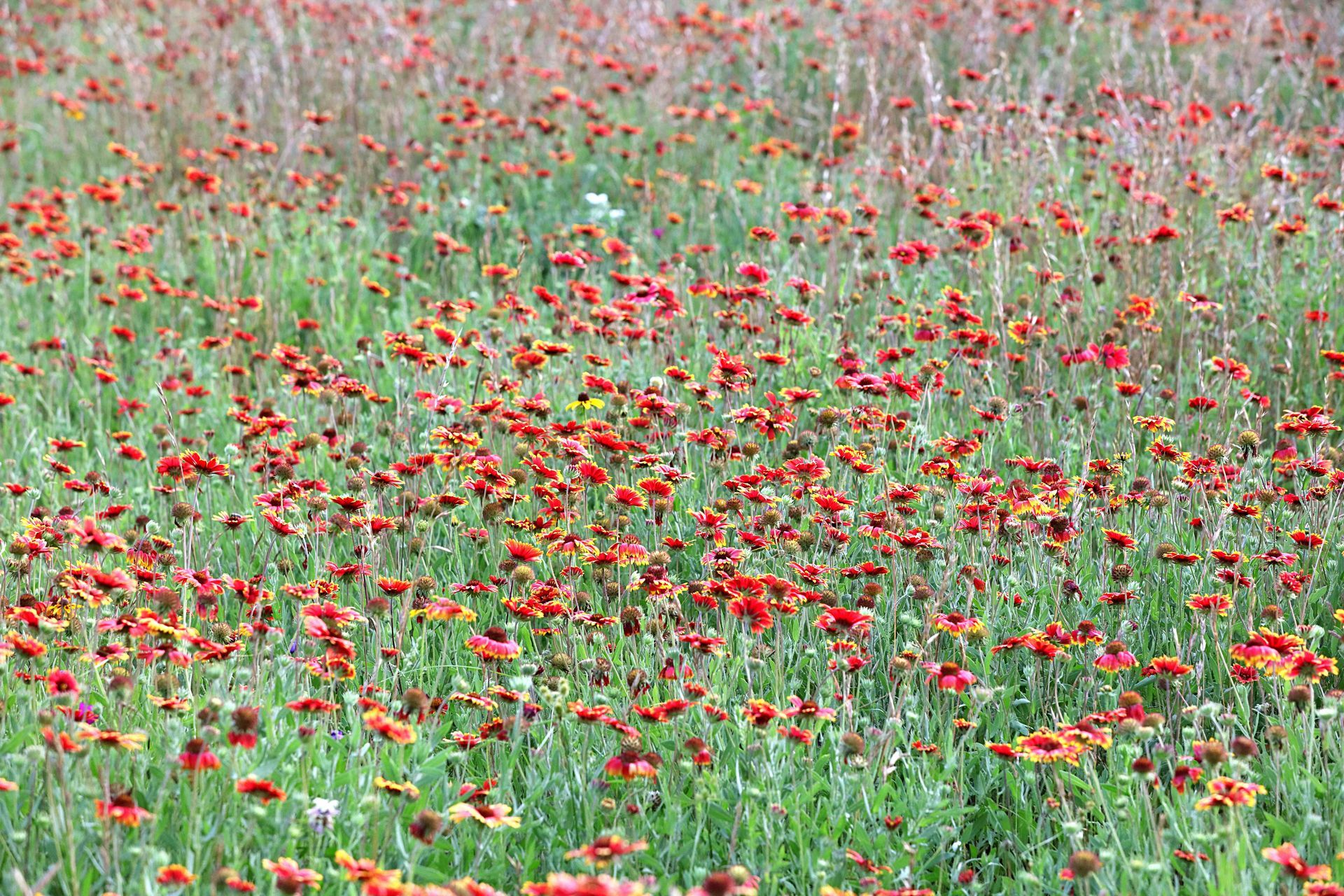
Winnington, Shropshire: MG5 habitat bank for Environment Bank
Problem: Single 28 ha habitat bank parcel targeting MG5 Lowland Meadow for BNG unit generation. Scale and programme required large-area coverage.
Solution: MG5-specification wildflower grassland seeding delivered across the full parcel in a compressed programme.
Result: Seed establishing well across the site. One of the largest single wildflower seeding projects in the CDTS North & West portfolio.
Client: Environment Bank
Location: Winnington, Shropshire
Scale: 28 ha
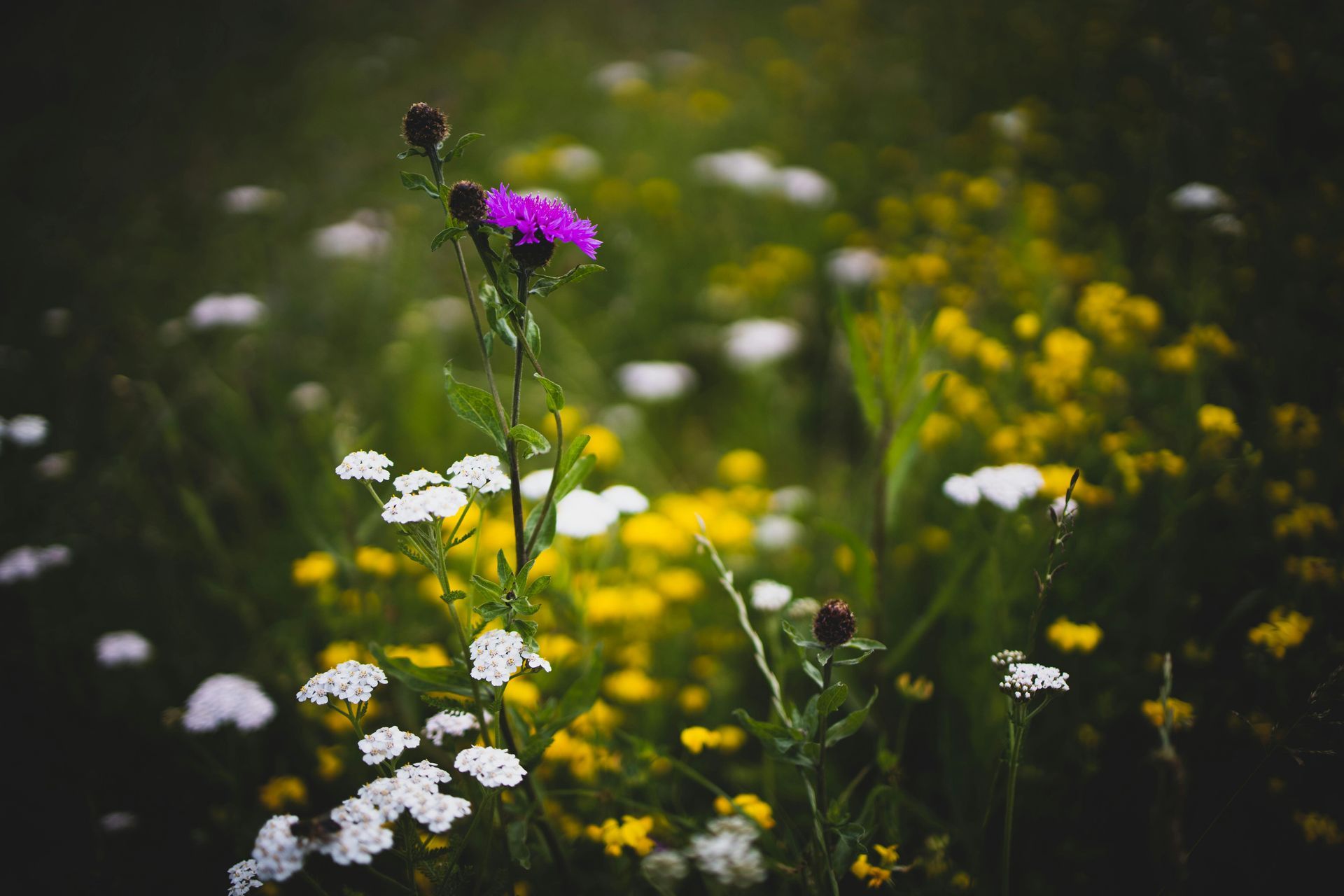
A419 Cirencester Bypass: calcareous wildflower on highway cuttings
Problem: Exposed chalk and limestone cuttings on a new bypass required wildflower establishment with secondary erosion control on steep faces.
Solution:
Specialist calcareous wildflower seeding matched to the underlying geology, applied across cuttings the length of the scheme.
Result:
Twenty years on, recent photographs confirm the cuttings remain a biodiverse wildflower corridor. Direct evidence of the long-term viability of specialist seeding on difficult geology.
Location: A419 Cirencester Bypass, Gloucestershire
Scale: 30 ha of highway cuttings

Tarrington Wetlands, Herefordshire: integrated seeding and plug planting
Problem: Newly created wetland site requiring a combined terrestrial and aquatic habitat scheme in a single mobilisation.
Solution:
Hydroseeding and conventional seeding across the dry areas, plus 15,000 wetland plug plants across the wet cells using 15 locally occurring species including yellow iris, greater pond-sedge, lesser bulrush, water mint, water-plantain and soft rush.
Result:
Both seeded and planted areas establishing well. Demonstrates capability to deliver integrated wetland habitat schemes inside a single programme.
Client: Bentleys
Location: Tarrington, Herefordshire
Scale: 15,000 m² seeding + 15,000 wetland plug plants
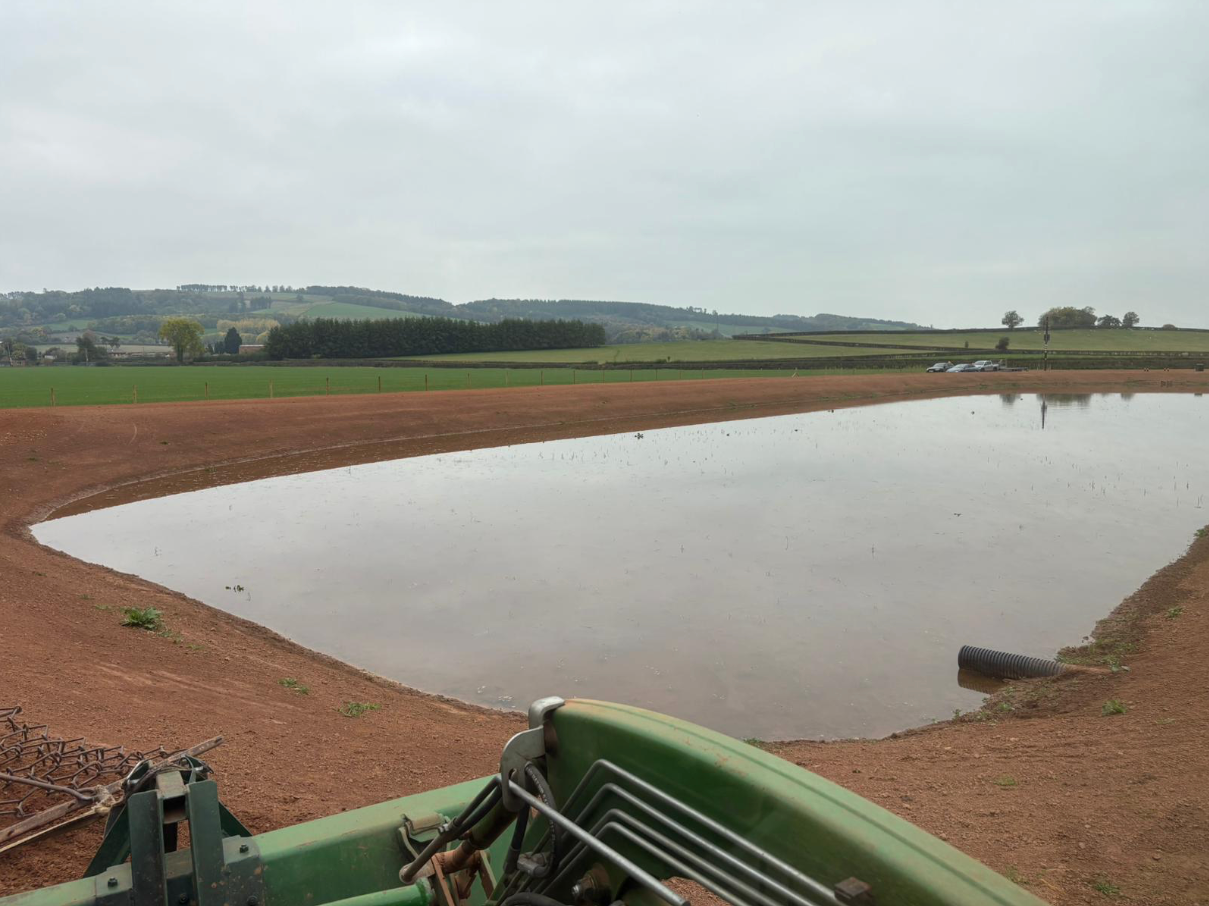
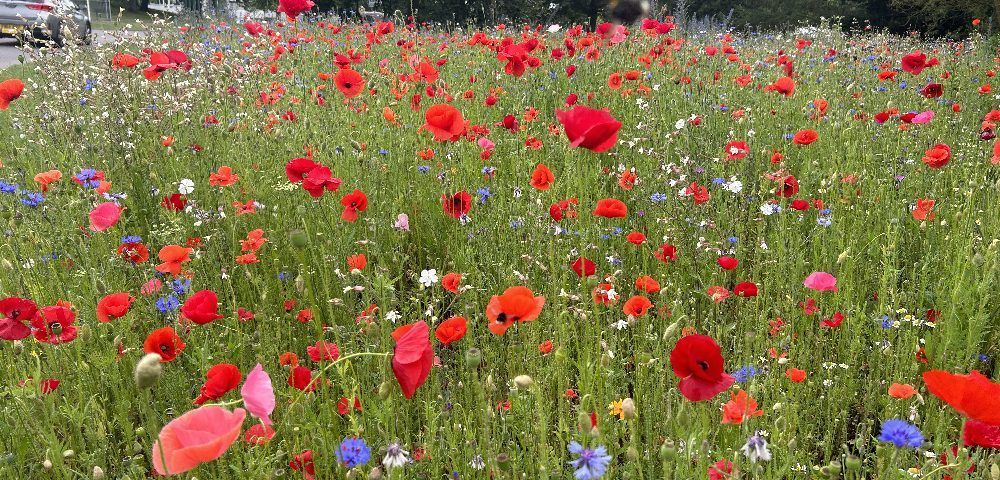
Solihull MBC: urban wildflower verge programme
Problem: Multi-year programme to convert road verges, roundabouts and public open spaces across the borough from amenity grass to wildflower meadow.
Solution:
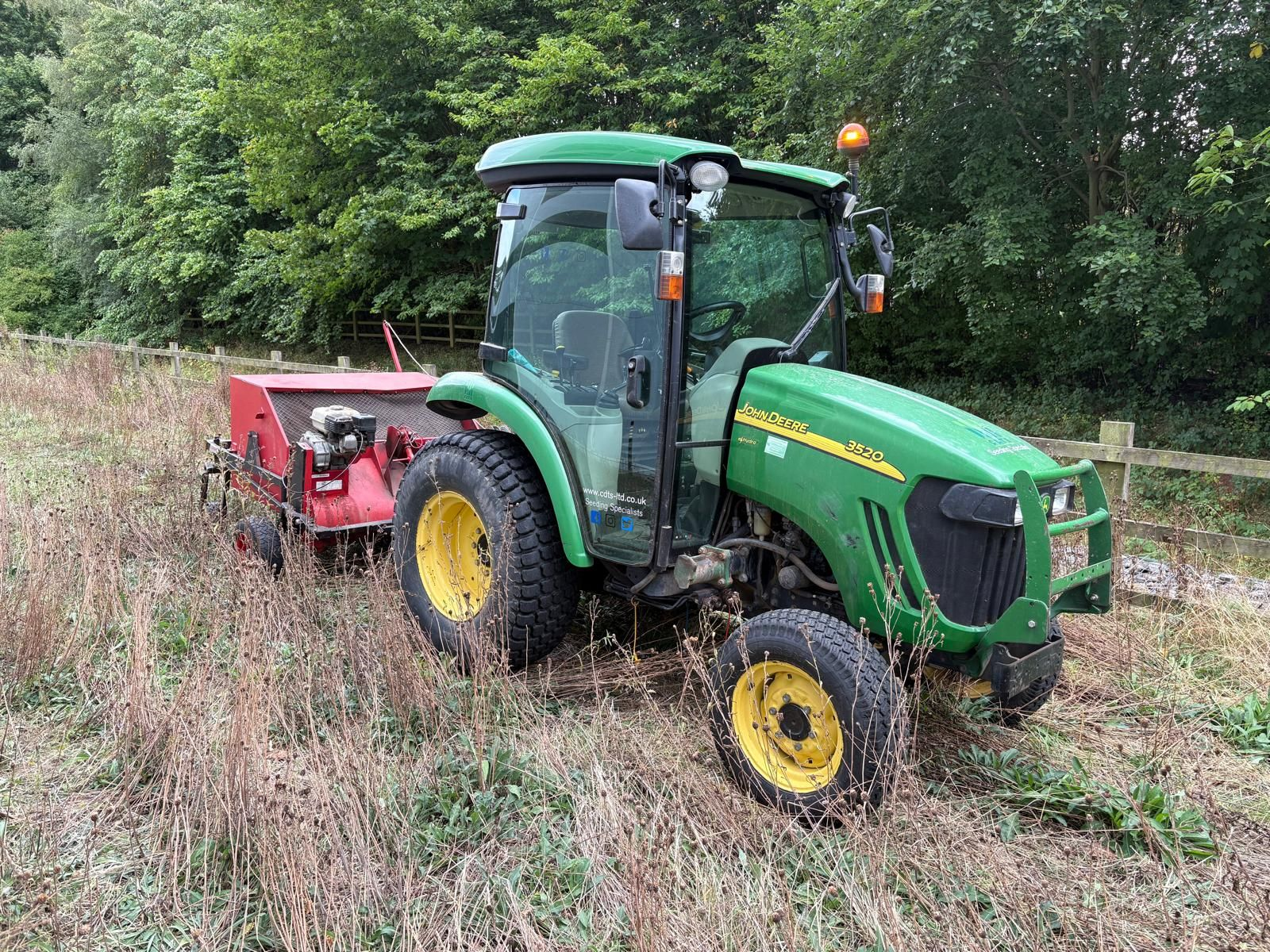
Compact tractor, rotovator and hydroseeder used to prepare and seed 22 sites including Dickens Heath, Chelmsley Wood, Shirley and Elmdon with annual colour and perennial meadow mixes.
Result:
Sites in continuous establishment since 2016. Strong public response and ongoing annual recommission from Solihull Metropolitan Borough Council.
Client: Solihull Metropolitan Borough Council
Location: Solihull, West Midlands
Scale: 10,000 m² across 22 sites
Frequently Asked Wildflower & BNG Seeding Questions
What is Biodiversity Net Gain and does it apply to my project?
Biodiversity Net Gain (BNG) is a legal requirement under the Environment Act 2021. Since 12 February 2024 for major developments and 2 April 2024 for small sites, most new developments in England must deliver a minimum 10% net gain in biodiversity, measured using the Statutory Biodiversity Metric and secured for 30 years. BNG for Nationally Significant Infrastructure Projects becomes mandatory in May 2026. If your project requires planning permission, it almost certainly requires a Biodiversity Gain Plan.
What is the Statutory Biodiversity Metric?
The Statutory Biodiversity Metric (previously Metric 4.0) is the Defra-published calculation tool used to measure habitat value before and after development. It assigns biodiversity units to each habitat parcel based on distinctiveness, condition, strategic significance and area. A simplified Small Sites Metric applies to eligible small developments. The tool has been stable since its November 2023 statutory release.
How much BNG unit value does wildflower meadow generate?
Species-rich grassland targeting Other Neutral Grassland (such as MG5) sits at Medium distinctiveness and generates more units per hectare than Modified Grassland. Actual unit yield depends on starting condition, target condition, strategic significance multipliers and risk multipliers. Faster time-to-target-condition, which hydroseeding supports through rapid establishment, reduces the metric's temporal risk multiplier and lifts unit output.
Hydroseeding, drill seeding or wildflower turf — which is right for BNG?
Hydroseeding suits large areas, slopes and habitat banks where cost per m² and programme are the priority. Conventional drill or broadcast seeding suits flat, accessible sites where the seedbed is fully machinery-accessible. Wildflower turf suits small prominent amenity areas where immediate visual cover matters more than area cost. At typical BNG scheme scales, hydroseeding is 20 to 50 times cheaper per m² than turf while delivering the same Defra metric habitat classification.
When is the best time to sow wildflowers?
Autumn (mid-August to early October) and spring (late March to early May) are the viable UK sowing windows. Autumn gives stronger first-year establishment because seeds overwinter naturally. Hydroseeding extends the practical window a little because the mulch layer retains moisture and buffers surface conditions, but it does not remove the need to sow in season. Under optimal UK growing conditions, visible germination typically follows within two to four weeks of sowing.
Why does site preparation matter so much for wildflower seeding?
Wildflowers are outcompeted by aggressive grasses, docks, thistles and nettles on fertile soils. Successful establishment depends on a low-fertility, weed-suppressed seedbed. This usually means stale seedbed preparation, multiple cultivations to exhaust the weed seed bank, and on some sites reducing topsoil depth or working onto subsoil. Skipping this stage is the single most common reason wildflower schemes fail.
Can you work from our ecologist's specification?
Yes. We routinely work to specifications issued by project ecologists, landscape architects and environmental consultants, including Biodiversity Gain Plans and Habitat Management and Monitoring Plans. We can also review the specification at design stage and flag anything that is unlikely to establish given site conditions, before it becomes a planning condition.
How long does a wildflower meadow take to establish?
Under optimal UK growing conditions, visible germination typically occurs within two to four weeks. A recognisable wildflower sward usually develops across the first full growing season. A genuinely species-rich meadow matures over three to five years as perennial species establish and the community diversifies. First-year annual nurse species such as cornflower and corn marigold provide colour while slower perennials build root systems.
Do you work across the whole of the UK?
Yes. CDTS North & West is based in Cheshire and operates nationwide. We deliver wildflower and BNG seeding for Tier 1 contractors, house builders, local authorities, environmental consultancies and habitat bank operators across England, Wales and Scotland.
Discuss Your Project
Send us the ecologist's habitat plan, Biodiversity Gain Plan or site drawings and we will confirm the right seeding method, indicative cost range and the programme window for your scheme. We can quote from drawings, site visits or tender documentation.