SUDS Ponds & Flood Management
Protecting drainage infrastructure and preventing erosion on attenuation basins, swales and flood embankments
Sustainable drainage and flood defence infrastructure require rapid vegetation establishment to prevent erosion, ensure regulatory compliance and protect project timelines. Bare soil on SUDS features and flood embankments leaves you exposed to washout, sedimentation failures and delayed handovers to adopting authorities.
CDTS North & West specialises in hydroseeding and conventional seeding for SUDS ponds, attenuation basins, swales and flood defence schemes across the UK. We establish protective vegetation quickly using water-safe, organic mulches and wetland seed mixes that prevent erosion whilst supporting biodiversity objectives.
Where SUDS and Flood Management Seeding Fits on Your Project
SUDS and flood alleviation projects typically require vegetation establishment across multiple features:
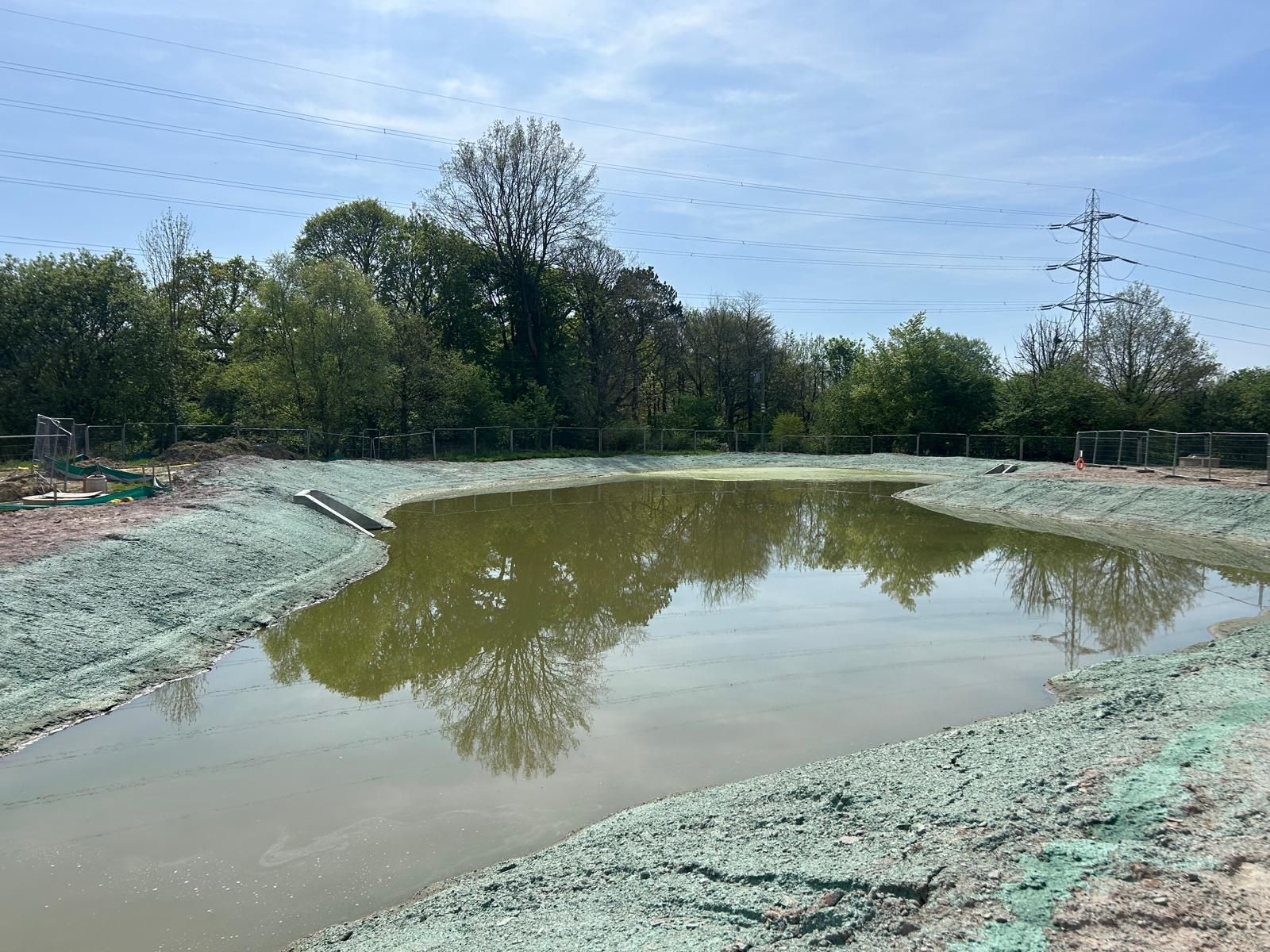
Attenuation ponds and basins
Steep embankment slopes (often 1:3 to 1:2) and invert floors requiring erosion protection and wetland plant establishment for water quality and biodiversity compliance.
Swales and filter strips
Linear drainage features needing grass or wetland mixes to slow runoff, filter pollutants and prevent channel erosion during storm events.
Flood embankments and levees
Large earthwork faces and crests requiring immediate stabilisation to prevent washout before seasonal flooding or heavy rainfall.
Detention basins and balancing ponds
Dual-purpose features combining flood storage with amenity grassland or wildflower meadows for planning and BNG requirements.
How CDTS Establishes Vegetation on SUDS Features
We select the appropriate seeding method based on slope gradients, access constraints and programme requirements:

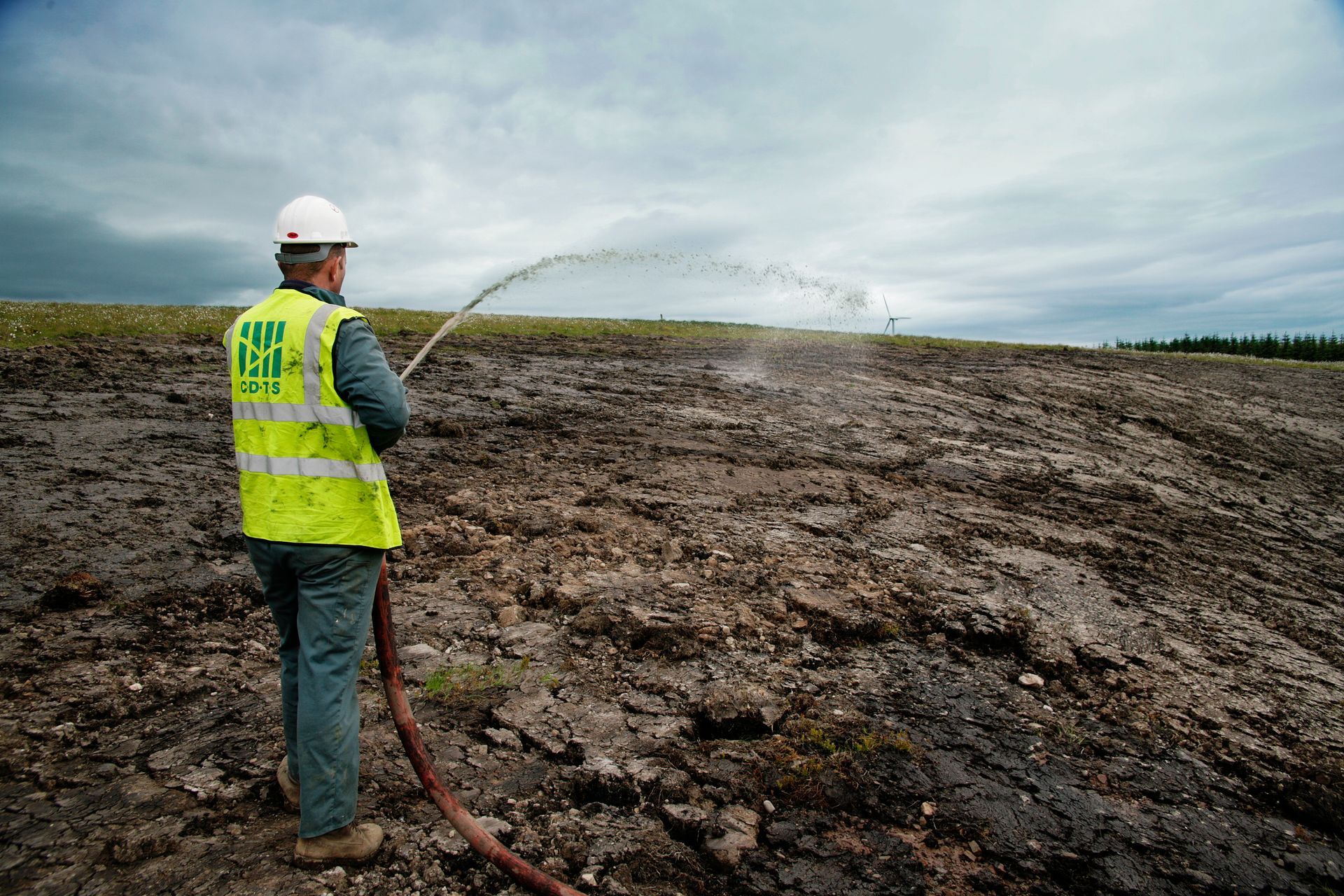
Hydroseeding for Steep Slopes & Large Areas
Rapid stabilisation with 24-hour bond strength
Our 6,000L lorry-mounted and 2,500L towed hydroseeders apply seed with organic mulch and tackifier. The mulch layer bonds to slopes within 24 hours, preventing washout whilst retaining moisture for germination across attenuation ponds, swales, and flood banks.
Conventional Seeding for Accessible Areas
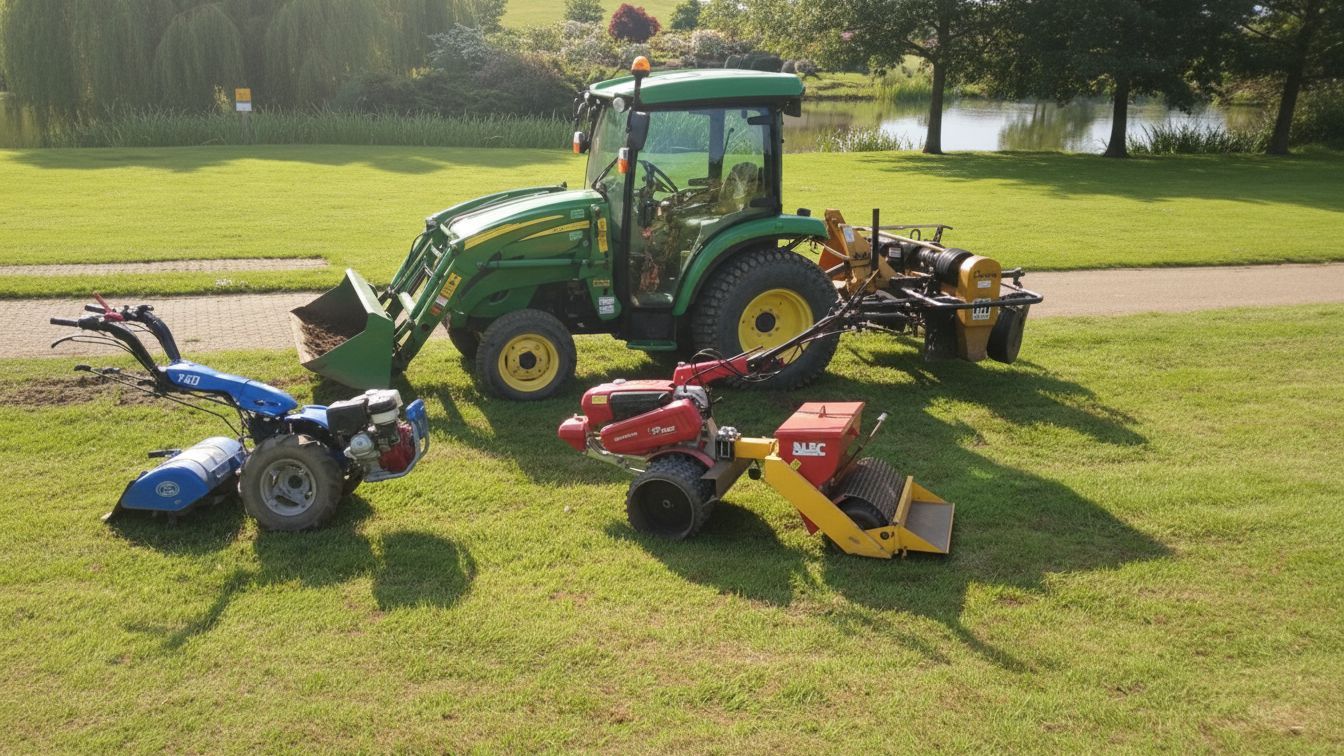
Economical coverage for extensive soft landscaping
Broadcast or drill seeding using specialist Aebi terratrac units for swale floors, pond surrounds and amenity grassland. Ideal for larger, flatter SUDS features where terrain and access allow efficient mechanical application.
Water-Safe Materials for Sensitive Sites
Zero contaminants for drinking water and river schemes
We use 100% organic, UK-manufactured Groweb mulches containing no synthetic polymers or contaminants. Essential for seeding around drinking water reservoirs, main river flood schemes and ecologically sensitive drainage basins where water quality protection is mandatory.
Wetland Seed Mixes for Functional Performance
Specialised mixes for periodic inundation and biodiversity
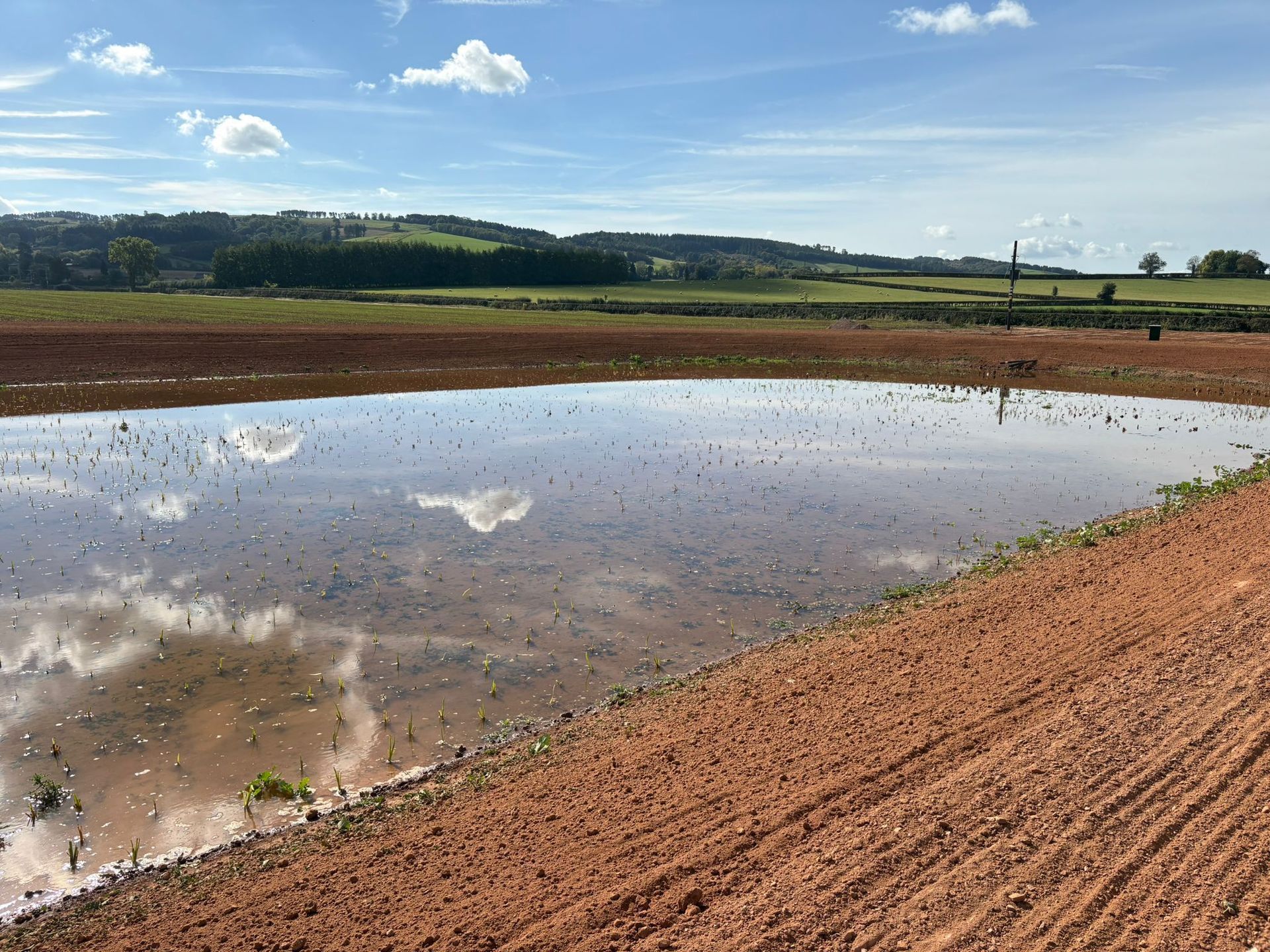
Attenuation basin interiors and swale beds receive wetland grass and emergent plant mixes that tolerate periodic inundation, slow water flow, and support invertebrate and amphibian habitat creation for biodiversity compliance.
Why CDTS for SUDS and Flood Management Projects
SUDS adoption and flood scheme handovers depend on proven vegetation establishment and regulatory compliance. Our 30+ years of experience on water company frameworks and housing developments demonstrates the technical capability and accreditations required for programme-critical drainage infrastructure.
Fast mobilisation for programme-critical timelines
Fleet of seven hydroseeders enables mobilisation within days of earthworks completion, preventing seasonal weather delays.
Proven track record on flood schemes and reservoirs
Completed projects include Bangor-on-Dee, Carlisle, Cheltenham flood alleviation schemes and Heaton Reservoir (Manchester) and Abberton Reservoir (Essex) embankments.
Compliant, auditable methods
CHAS, Constructionline Gold and ISO 9001:2015 accredited. Pre-vetted RAMS and environmental controls for safe operation around watercourses and water supply infrastructure.
FAQ's
When is the best time to seed SUDS ponds and flood embankments?
Hydroseeding and conventional seeding work best during March–September when soil temperatures support germination. Autumn seeding (September–October) is viable but may require follow-up in spring if establishment is weak before winter dormancy.
What seed mixes should be specified for attenuation pond interiors?
Wetland grass mixes for pond interiors and inundation zones that tolerate periodic flooding. Standard amenity mixes suit drier pond surrounds and embankment crests. Where biodiversity or BNG is required, native wildflower and emergent wetland species can be incorporated without compromising erosion control performance.
How long does it take to achieve vegetation cover for SUDS adoption?
Hydroseeding, under optimal conditions, can achieve visible green cover within 7–14 days during growing season. Water companies and local authorities usually require 80%+ cover before adopting SUDS features. Hydroseeding accelerates this compared to seeding without mulch, reducing the period between practical completion and adoption.
Can you work on active water supply infrastructure?
Yes. We use 100% organic, UK-manufactured Groweb mulches that contain no synthetic polymers or contaminants. This ensures water quality protection when seeding around drinking water reservoirs, main river flood schemes and ecologically sensitive drainage basins. Recent projects include Heaton Reservoir (Manchester) for United Utilities.
What access is required for hydroseeding equipment?
Hydroseeder units range from 2.5–6 tonne vehicles. Confirm access routes and ensure embankment compaction is complete before seeding. Hydroseeding does not require trafficked access across slopes, reducing compaction risk on finished earthworks.
