
Commercial Hydroseeding Contractors UK
Specialist hydroseeding for highways, rail, housing, quarries and land reclamation: designed for erosion control, BNG compliance and programme certainty
For more than 30 years we’ve delivered large-scale hydroseeding across the UK, from new bypasses and embankments to dams, landfills and business parks. Our fleet of six hydroseeders, including a 6,000L lorry-mounted unit and 2,500L towed machine, lets us cover everything from flat batters to steep, restricted access slopes efficiently and safely.
What Hydroseeding Delivers On Site
Hydroseeding establishes dense, uniform vegetation faster than broadcast seeding or manual methods, typically delivering 95% cover within 6–8 weeks. The sprayed mulch locks seed to the soil surface, shields against rainfall and wind, and maintains moisture through germination. Preventing the seed wash away common with conventional methods on slopes.
Programme Protection
Hydroseeding covers large areas quickly. A single 6000L tank load treats approximately 2,000-3,000m² in one pass. For projects with tight handover dates, this speed reduces the gap between earthworks completion and vegetation establishment.
Erosion Control
The mulch component bonds to the soil surface, reducing runoff velocity and protecting seed until root systems develop. For high-risk slopes, we apply Bonded Fibre Matrix (BFM), a spray-applied erosion blanket that delivers immediate protection without manual installation.
Cost Predictability
Hydroseeding is priced per square metre with minimal variation. Unlike erosion blankets, there are no installation labour variables. Coverage rates are consistent and measurable, making budget forecasting straightforward.
Where Hydroseeding Fits On Your Project
Hydroseeding is the default vegetation method for sites where speed, scale, or difficult terrain make conventional seeding or turfing impractical. It's the proven solution when you need to vegetate several hectares in days rather than weeks, when slopes are too steep for safe manual seeding, or when ground conditions won't support turfing equipment.
Whether you're managing highway slopes that require rapid erosion protection, restoring extractive sites with challenging substrates, or delivering SUDS infrastructure that must meet adoption standards, hydroseeding reduces programme risk and provides consistent results across varied ground conditions.
The method is particularly effective on linear infrastructure schemes, large-scale land restoration projects, and sites with restricted access where mobilising multiple seeding teams would be inefficient or create additional H&S risk.
Highway & rail embankments
Steep slopes (up to 45°) where conventional seeding or turfing is impractical or unsafe
SUDS ponds and basins
Rapid grass establishment on pond sides and bases to prevent erosion and meet adoption standards
Landfill restoration
Cost-effective vegetation of capped landfill domes and perimeter slopes
Quarry reclamation
Large-scale revegetation of benches, spoil heaps and quarry floors
Housing and commercial POS
Fast establishment for SUDS, attenuation basins and public open space to support adoption and sales progression.








We have collaborated for many years with CDTS on a whole range of seeding projects covering conventional seeding, hydroseeding and wildflower seeding for BNG enhancement. Extremely professional with highly experienced and qualified teams. Great communication, flexible and reactive service!
Paul Hadley
November 2025
We engaged with CDTS for the hydroseeding across 4000 square metres of banks at a project in Blyth for Stainforth Construction. The team responded quickly and communication was good. Despite a small machinery hiccup, the hydroseeding was completed on time in just one day. Good service, good communication throughout, and completed professionally, on time. Seeds are just starting to germinate, we will update progress when we return to site.
J Paxman Landscapes
February 2026
I’ve used CDTS Seeding for many years, using both amenity and bespoke wildflower seed mixes across hydroseeding and conventional seeding projects. Their attention to detail and genuine desire to create the best possible finish really sets them apart.
Professional, reliable, and consistently excellent. Highly recommended for anyone needing quality seeding work.
Ant Brown
November 2025
Why Choose CDTS for Your Project?
Hydroseeding fails when contractors lack the right equipment, use generic specifications, or can't deliver to programme. CDTS removes these risks with a specialist fleet, site-specific technical planning, and 30 years of proven delivery across the UK's construction sector.
10 million m² seeded
Our team has delivered hydroseeding across motorways, A-roads, flood alleviation schemes, dams, wind farms, quarries and major housing developments for over 3 decades across England, Scotland and Wales.
30+ years experience
CDTS North & West holds CHAS accreditation and carries £5 million public liability and £10 million employers liability insurance. Full RAMS provided for every project.
6 hydroseeders
We operate six hydroseeders, from a 6,000L truck-mounted unit for major contracts to 2,500L towed machines for restricted access. That means we can treat large areas quickly while still reaching difficult slopes, batters and remote corners of the site.
How Our Hydroseeding Process Works
01
Site appraisal & specification
We review drawings, slopes, soil type and access, then agree seed mixes, mulch rates and application areas with your team.
02
Ground preparation
We check that soil quality, compaction and surface condition meet the specification, and can provide conventional cultivation where needed.
03
Mixing the slurry
In the hydroseeder tank we combine water, binder, mulch and seed to the specified rates, agitating continuously for a consistent slurry.
04
Application
The slurry is sprayed evenly by canon or hose, with overlapping passes to achieve uniform coverage and correct application rates.
Recent Hydroseeding Projects
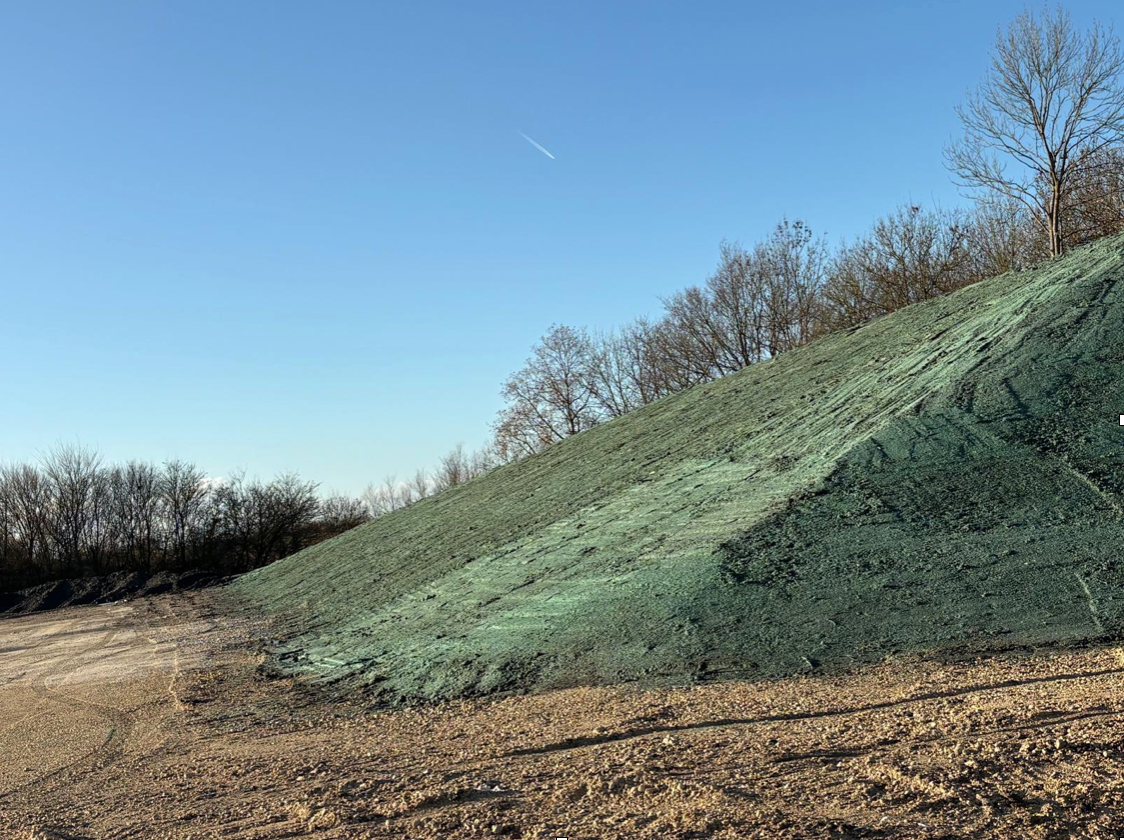
Jones Bros Civil Engineering – Thorpe Marsh Battery Energy Storage Site
50,000 m² of steep, highly erodible banks hydroseeded for erosion control on new battery storage facility. Works completed in November, achieving germination within 10 days despite unfavourable late-season conditions.
Yorkshire,
November 2025
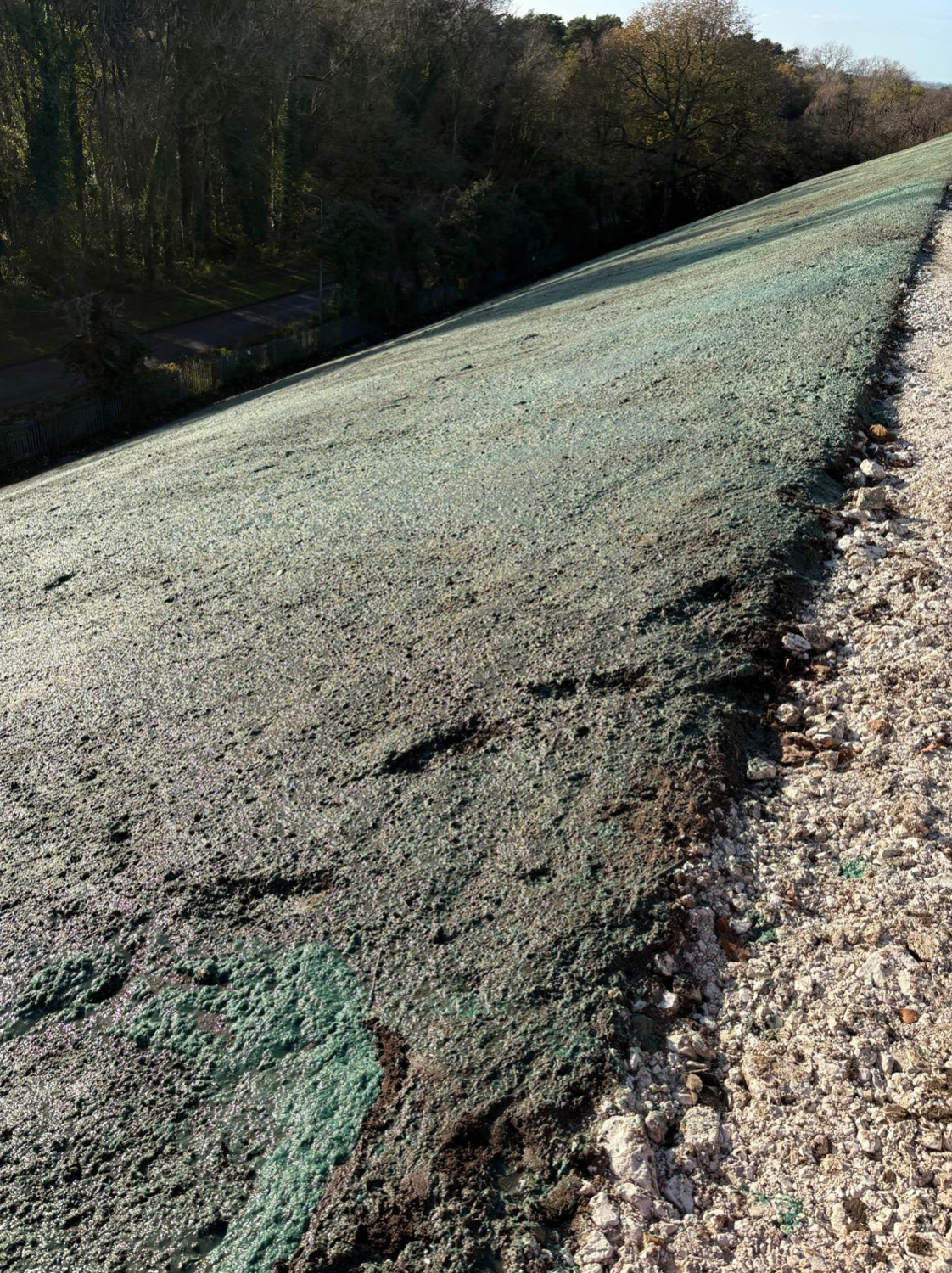
Story Rail – Frodingham Rail Embankment
8,000 m² rail embankment hydroseeded adjacent to live railway. Project required specialist access management and extended hose runs to reach very steep slopes while maintaining operational safety around active rail infrastructure. Works delivered within tight access windows and railway possession constraints.
Lincolnshire,
October 2025
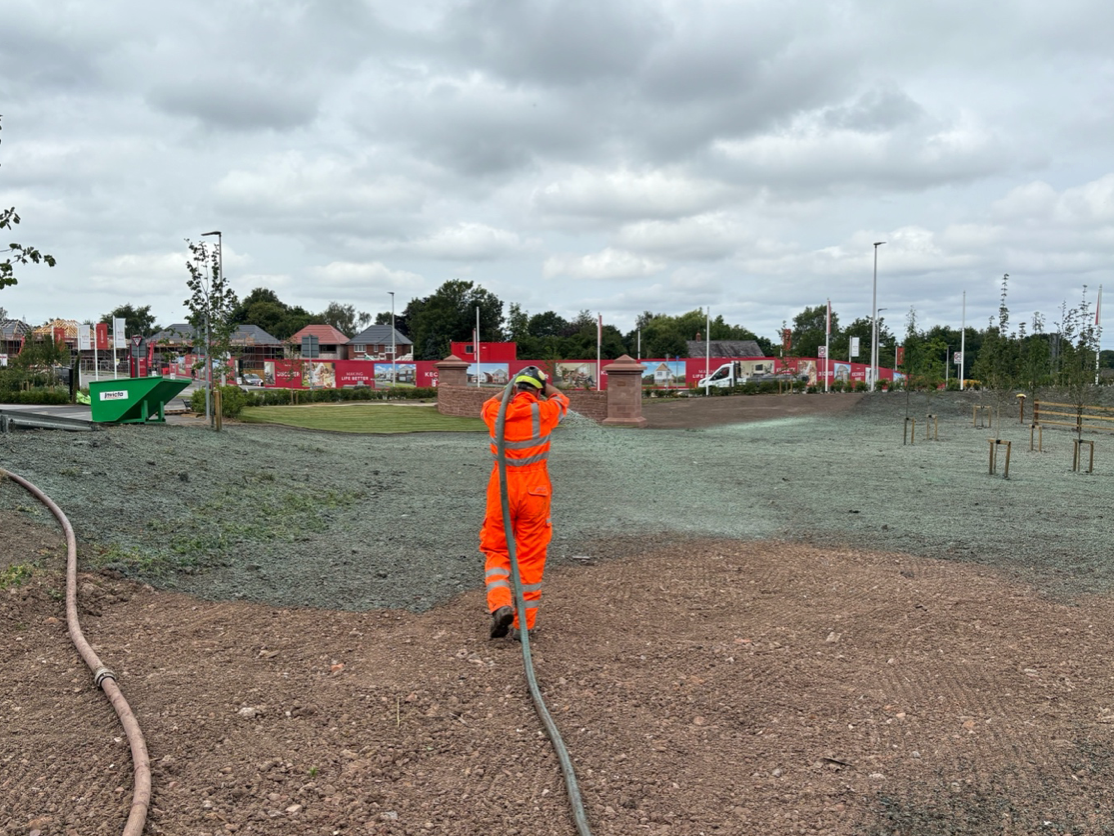
Landstruction (Redrow) – Daresbury Housing Development
3,000 m² of development banks and SUDS pond slopes hydroseeded with green mulch for immediate visual impact ahead of director site visit. Combined hydroseeding with wildflower/BNG seeding across public realm areas to support planning requirements and sales environment. Works delivered to tight deadline with instant green appearance achieved.
Warrington, Manchester
October 2025

Tarmac - Swinden Quarry Land Reclamation
60,000 m² of steep limestone quarry slopes (1:2.5 gradient) hydroseeded for stabilisation and ecological restoration within a National Park. Germination achieved within 2 weeks despite challenging substrate and autumn conditions.
North Yorkshire,
November 2025
FAQs
How quickly does hydroseeding germinate?
Under optimal UK growing conditions, hydroseeded areas typically show visible germination within 7–14 days. Full vegetation establishment takes 6–8 weeks.
What areas of the UK does CDTS cover?
We operate nationally from our Cheshire base, with 6 hydroseeding units — including 6,000L lorry-mounted machines for large-scale schemes and 2,500L towed units for restricted-access sites. We regularly work across England, Scotland and Wales on highway, rail, utilities and land restoration projects.
What slopes can hydroseeding handle?
Standard hydroseeding is effective on slopes up to 3:1. BFM extends this to 1:1 (45°), making it suitable for near-vertical cut faces, dam embankments and quarry benches where other methods are impractical or cost-prohibitive.
Can hydroseeding be carried out in winter?
Hydroseeding requires ground temperatures above approximately 5°C for reliable seed germination. Works can be programmed for late winter/early spring when conditions allow, or — where erosion protection is urgently needed ahead of growing season — BFM can be applied to stabilise the surface and hold seed dormant until conditions improve. We advise on specification based on your programme dates.
Can hydroseeding be used for wildflower or BNG seeding?
Yes. Hydroseeding is well suited to wildflower establishment and Biodiversity Net Gain (BNG) schemes, allowing precise application of specified seed mixes — including locally sourced or low-germination wildflower species — across large or difficult-to-access areas. We work from client-supplied ecological specifications or can advise on appropriate mixes for your habitat target and BNG metric requirements.
Discuss Your Project
Whether your site is in Scotland, the Midlands, the North West or the South East, we can review your drawings, discuss access and ground conditions, and recommend the right seeding or erosion control approach. Contact us to arrange a site survey or request a quote.