
Direct Tree Seeding Contractors UK
Pioneer Direct Tree Seeding for Quarries, Landfills, Spoil Heaps and Brownfield Sites
CDTS North & West delivers direct tree seeding on quarries, landfill sites, spoil heaps and brownfield land where conventional planting is costly, slow or difficult to maintain. We develop site-specific seed specifications using viability data, dormancy-breaking treatments and nurse crops to establish naturally regenerating woodland on challenging substrates.
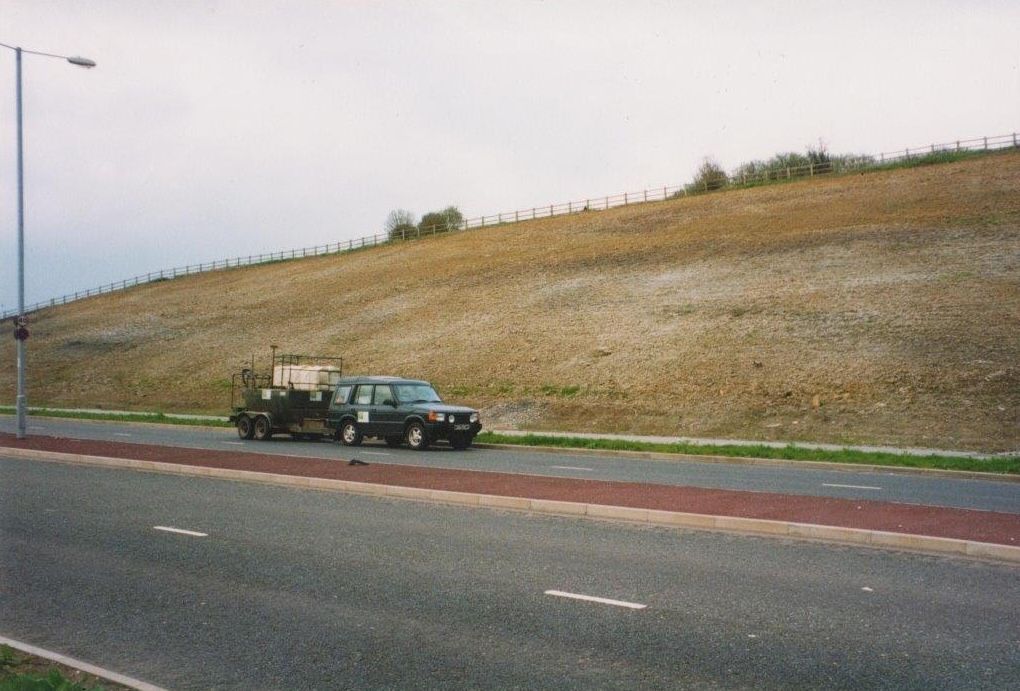

What Direct Tree Seeding Delivers On Site
Direct tree seeding establishes naturally regenerating woodland on challenging substrates, eliminating planting labour and reducing costs by around 60–80% compared to nursery stock. Seedlings germinate in situ and adapt from day one to hostile conditions, producing hardier plants than transplanted saplings. The method mimics natural succession, delivering authentic woodland structure and species distribution that satisfies restoration obligations on former industrial sites.
Restoration Compliance
Meets planning conditions and aftercare requirements on quarries, landfills and mining sites. Achieves specified woodland cover without heavy machinery that could compromise landfill caps or sensitive substrates.
Cost Efficiency
Eliminates planting labour, tree stakes and nursery costs. Typical savings of 60–80% over conventional planting make large-scale woodland creation viable on tight restoration budgets.
Natural Establishment
Seedlings adapted to site conditions from germination outperform transplanted stock on hostile substrates. Mimics natural regeneration for authentic woodland structure and self-sustaining ecosystems.
Where Direct Tree Seeding Fits on Your Project
Direct tree seeding removes the constraint of conventional planting on large or hostile sites. Where low-nutrient substrates, poor access or extensive areas make tree planting uneconomical or impractical, direct seeding delivers woodland establishment at scale. The method particularly suits restoration sites under regulatory aftercare, where achieving specified tree densities and species mixes is mandatory but budgets are constrained.
Former industrial sites—mining spoil, quarry benches, landfill caps, brownfield land—present conditions where nursery stock struggles: acidic or alkaline substrates, compaction, contamination, minimal topsoil. Seedlings germinating in these conditions develop site-adapted root systems and stress tolerance that transplanted saplings cannot match. We regularly work on sites across the North West, Yorkshire, the East Midlands, South Wales and the Home Counties, and can mobilise to all mainland UK locations.
Large-scale woodland establishment on benches, spoil heaps and quarry floors following mineral extraction
Pioneer species seeding on low-nutrient capping layers to achieve woodland cover without compromising liner integrity
Coastal dunes
Pioneer tree and shrub establishment on coastal sites with sandy soils and exposure constraints
Woodland creation on former industrial land, contaminated substrates and development site perimeters
How Our Direct Tree Seeding Process Works
01
Site appraisal & specification
We assess substrate type, nutrient levels, pH, exposure and access to develop project-specific seed mixes and sowing rates. Using seed viability and field emergence data, we calculate densities required to achieve target seedling populations per m² in the specified species ratio.
02
Seed preparation & dormancy breaking
Tree seeds undergo species-specific treatments—cold stratification, scarification, soaking—to overcome dormancy mechanisms. Seeds are sized and categorised for appropriate sowing methods. Nurse crop species are selected to shelter establishing seedlings.
03
Ground preparation
We verify soil quality, compaction and surface condition meet specification requirements. Where needed, we provide conventional cultivation to create suitable tilth. For sensitive substrates like landfill caps, preparation is minimal to preserve liner integrity.
04
Sowing
Seeds are applied using appropriate methods: large seeds (acorns, chestnuts) are broadcast or drilled; fine seeds are hydroseeded with carrier. Sowing typically occurs in late autumn or winter, aligning with natural seed fall and winter moisture patterns.
05
Establishment management
We identify site-specific detrimental factors—predation, climate extremes, invasive weeds—and recommend protective measures. Nurse crops provide ground cover and microclimate while slower-germinating tree species establish over subsequent growing seasons.
Why Choose CDTS North & West for Your Project
Restoration planting fails when contractors apply forestry methods to hostile substrates. Generic seed mixes cannot establish on acidic spoil or low-nutrient caps. Underspecified sowing rates waste budgets on inadequate coverage. Poor dormancy treatments result in patchy germination. Direct seeding without ecological expertise produces failed woodland and repeated mobilisations. CDTS removes these risks through specialist capability developed over 30+ years pioneering the method in the UK.
UK pioneers of direct tree seeding
30+ years developing proven specifications for hostile substrates. Project-specific calculations ensure target tree densities using viability data and field germination rates for each species.
Specialist dormancy treatments
Species-specific stratification, scarification and preparation protocols bring tree seeds out of dormancy before sowing, ensuring synchronised germination when site conditions are favourable.
Proven track record on hostile sites
Successful woodland establishment on colliery spoil, landfill caps, quarry waste and contaminated land where conventional planting cannot deliver. Track record satisfies regulatory aftercare requirements.
Frequently Asked Direct Tree Seeding Questions
What is direct tree seeding?
Direct tree seeding involves sowing tree and shrub seeds directly onto prepared ground rather than planting nursery-grown saplings. Seeds germinate in place, developing natural root systems undisturbed by transplant shock. The result is a robust, self-sustaining woodland that mimics natural regeneration.
Which sites is direct tree seeding suited to?
It performs best on hostile sites with low-nutrient, poor soils or subsoils — the very conditions where planted saplings often fail. Typical applications include mining spoil heaps, colliery sites, quarry restoration, landfill caps, brownfield land, coastal dunes, and steep embankments where planting crews cannot safely operate.
When is direct tree seeding carried out?
Sowing is typically done in late autumn or winter, aligning with natural seed fall and taking advantage of winter moisture to support germination.
How long does it take for woodland to establish?
Seedlings emerge over the first growing season and develop into a robust woodland stand over several years. Direct-seeded trees often develop deeper taproots than transplanted saplings, making them more drought-resilient and structurally stable in the long term.
Why do direct tree seeding projects sometimes fail?
Most failures stem from poor specification and a lack of understanding of the technical complexities involved — particularly around dormancy breaking, sowing rates and early establishment management. CDTS has pioneered direct tree seeding in the UK since 1991 and has seen numerous failed attempts by others. Informed specification writing and careful execution are critical to success.
Where does CDTS North & West carry out direct tree seeding work?
We work across England and Wales, with projects regularly undertaken in the North West (Cheshire, Lancashire, Greater Manchester), Yorkshire, the East and West Midlands, South Wales, and the South East. We are also able to mobilise to Scotland and other mainland UK locations for larger restoration commissions. If you're unsure whether we cover your area, get in touch — we're happy to discuss your site wherever it's located.
Discuss Your Project
Whether your site is in Manchester, Scotland, Devon or Kent, we can review your drawings, discuss access and ground conditions, and recommend the right direct tree seeding approach. Contact us to arrange a site survey or request a quote.